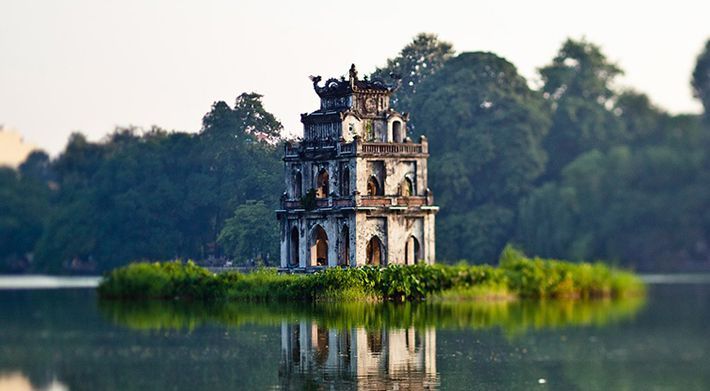
13 Historical Sites in Hanoi You Must Visit Once in 2026. Hanoi, the capital of Vietnam, is often described as a “living museum” with over a thousand years of history. From ancient citadels and sacred temples to colonial-era structures, each site reflects a different chapter in the nation’s past. If you truly want to understand Hanoi, start with these 13 remarkable historical landmarks.
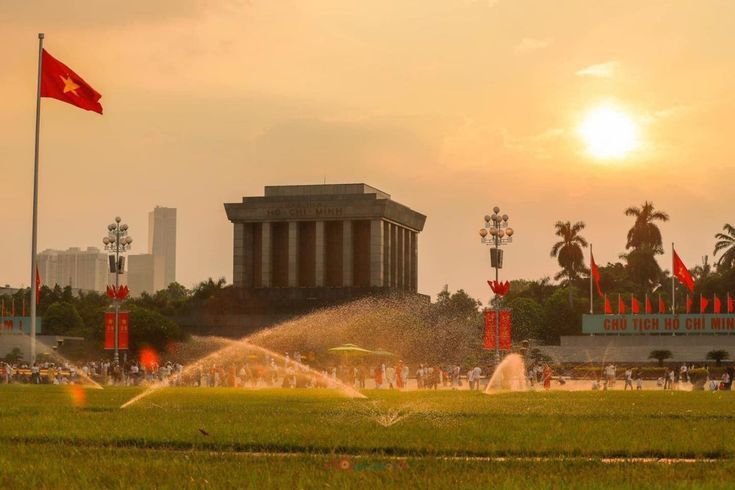
1. Imperial Citadel of Thang Long – The political heart for over 1,000 years, Historical Sites in Hanoi
The Imperial Citadel of Thang Long was established in 1010 under the reign of Ly Thai To when he moved the capital to Thang Long. For centuries, it served as the political center of successive dynasties, including Ly, Tran, Le, and Nguyen.
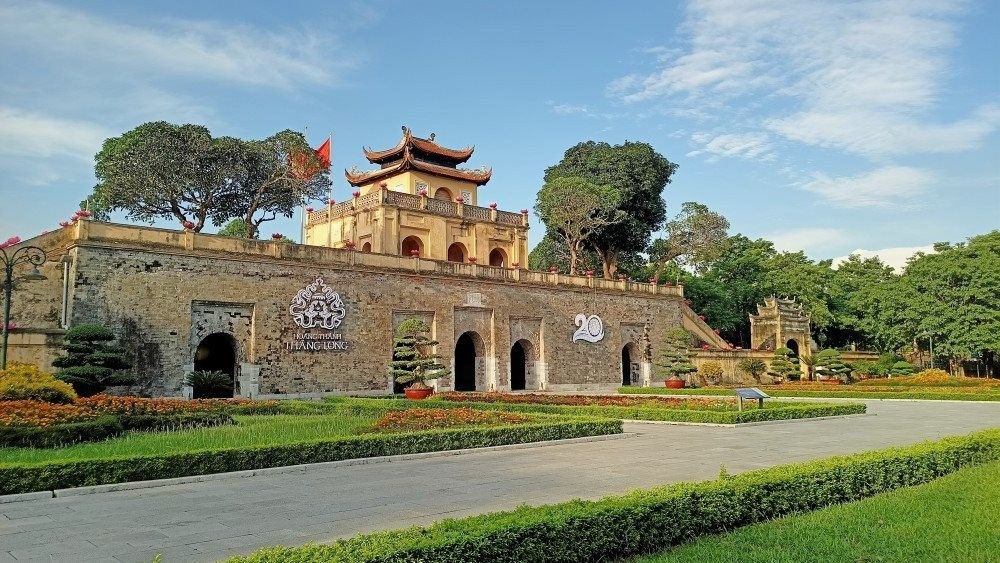
What makes this site unique is its layered history—archaeological remains from different periods overlap, revealing the evolution of royal life. Excavations at 18 Hoang Dieu uncovered palace foundations, ancient wells, and intricately decorated ceramics.
Key architectural highlights include:
- Doan Mon Gate (main entrance)
- Kinh Thien Palace (central ceremonial space)
- Hau Lau (residence of royal women)
📍Address: 19C Hoang Dieu Street, Ba Dinh District, Hanoi, Vietnam
👉 Opening hours: 08:00 – 17:00 (closed Mondays)
👉 Detailed ticket prices for visiting (updated 2026):
- Adults: 100,000 VND per visit
- Students: 50,000 VND per visit (valid student ID or citizen ID required)
- Free admission: Children under 15 years old, people with meritorious service to the revolution, and individuals with severe disabilities
2. Cua Bac Gate – A surviving witness of war
Cua Bac (North Gate) is the only remaining gate of the Hanoi Citadel built during the Nguyen Dynasty in the 19th century.
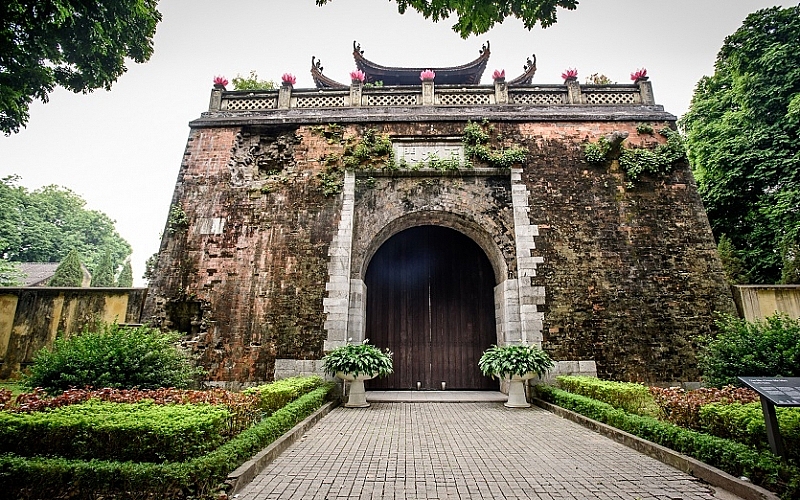
One of its most striking features is the visible cannon damage left from French attacks in 1882, making it a powerful historical symbol.
The structure reflects Vauban-style military architecture, with thick brick walls, arched entrances, and a guard tower above.
📍Address: 56 Phan Dinh Phung Street, Ba Dinh District, Hanoi, Vietnam
👉 Entrance fee: Free
3. O Quan Chuong – The last remaining ancient city gate of Hanoi
O Quan Chuong is the only surviving gate from the old Thang Long citadel system, located near Hanoi’s Old Quarter. It was built in 1749 during the reign of King Le Hien Tong, when Thang Long was still a major political and commercial center.
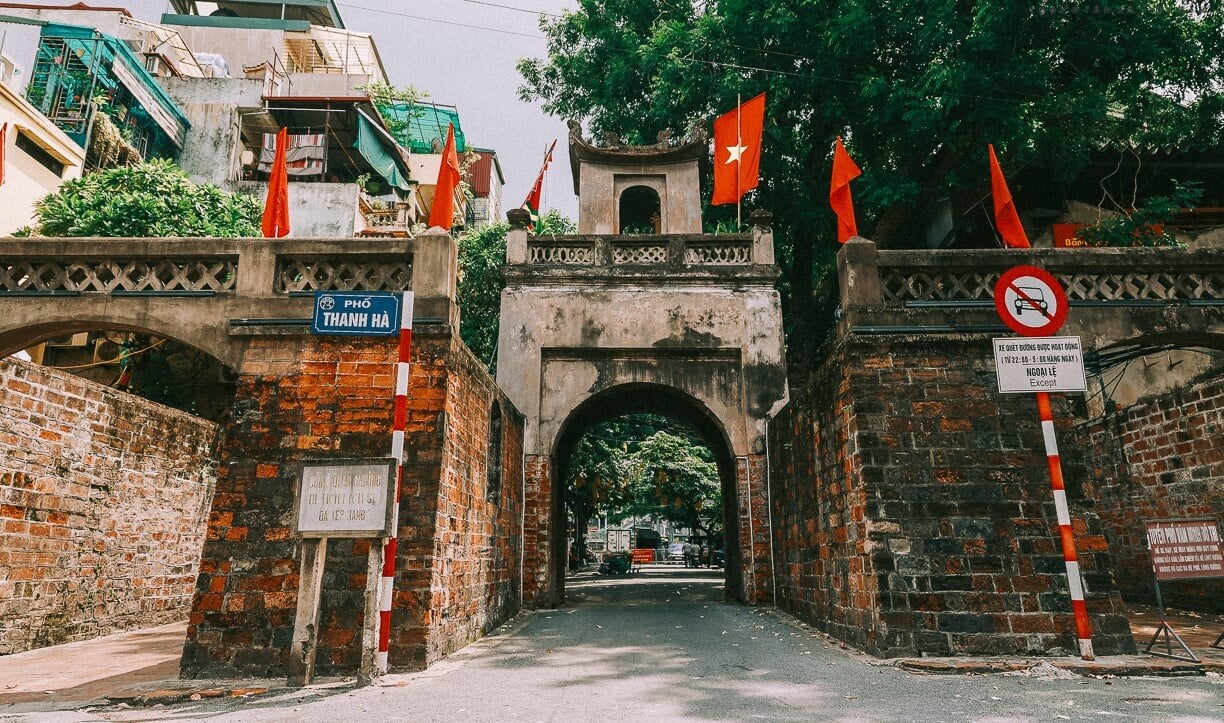
Originally, the gate was called Dong Ha Mon and served as an important checkpoint controlling entry and exit on the eastern side of the city. Later, it was renamed “O Quan Chuong” by locals to honor a military officer who died defending the capital, and this name has remained in use until today.
Architecture and features
- One large central gate
- Two smaller side gates
- A watchtower above used for surveillance
- Thick brick walls built for defense
The gate once controlled trade and movement in the busy commercial area of Thang Long. Today, it stands as an important historical monument, reflecting the architecture and urban life of Vietnam’s feudal era.
📍Address: O Quan Chuong Street (Hang Chieu – Hang Duong area), Hoan Kiem District, Hanoi, Vietnam
👉 Entrance fee: Free
4. Hanoi Flag Tower – A symbol of national pride
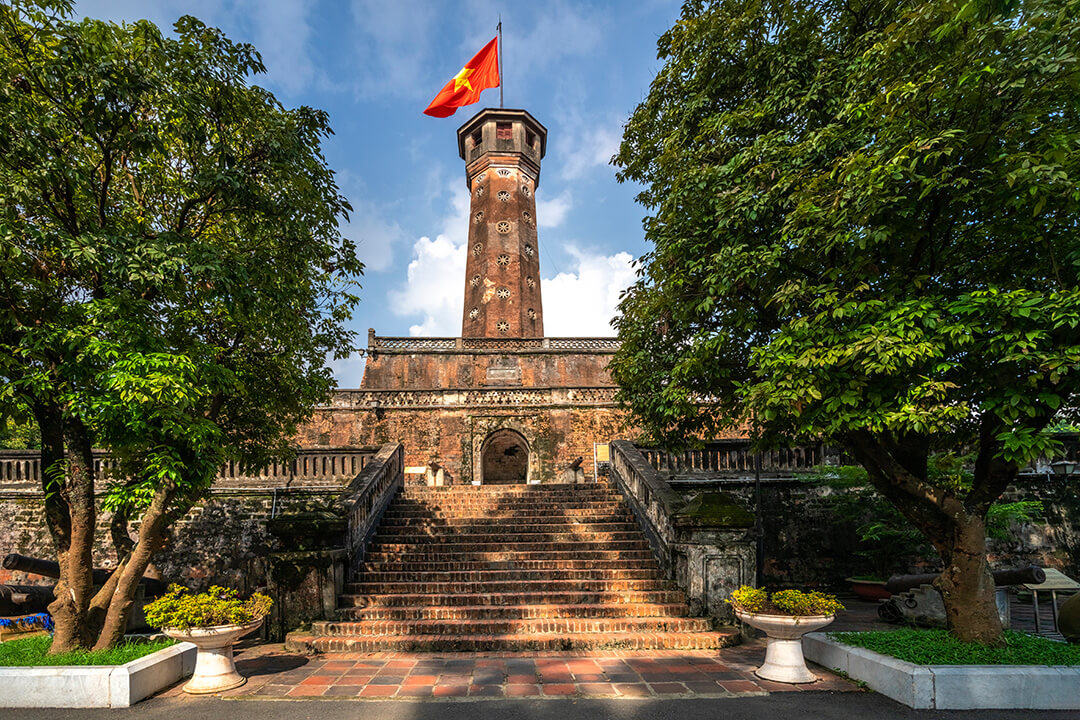
The Hanoi Flag Tower is one of the most iconic historical landmarks in the capital. It was built in 1812 during the Nguyen Dynasty as part of the military structures within the Imperial Citadel of Thang Long. Remarkably, it survived the destruction of war and remains one of the few intact structures from that period.
Architecture
The tower has a strong, defensive design typical of early 19th-century military architecture:
- Three-tiered base platforms, each slightly smaller as they rise
- A cylindrical tower body built above the base
- A flagpole at the top, where the Vietnamese national flag is proudly displayed
The structure is over 40 meters tall (including the flagpole) and is built from brick with small decorative openings that also served defensive purposes.
Today, the Hanoi Flag Tower is a powerful symbol of resilience and national pride. It stands within the Vietnam Military History Museum complex, making it both a historical monument and an educational site. Visitors can also climb inside the tower area to enjoy views of the surrounding grounds and nearby streets.
📍Address: Vietnam Military History Museum area, 28A Dien Bien Phu Street, Ba Dinh District, Hanoi, Vietnam
👉 Entrance fee: ~20,000 VND
5. Hang Dau Water Tower – A colonial architectural gem
Hang Dau Water Tower is a distinctive French colonial structure built in 1894 during the period when Vietnam was under French Indochina administration. It was originally designed as an important part of Hanoi’s early water supply system, helping store and distribute clean water to the city.
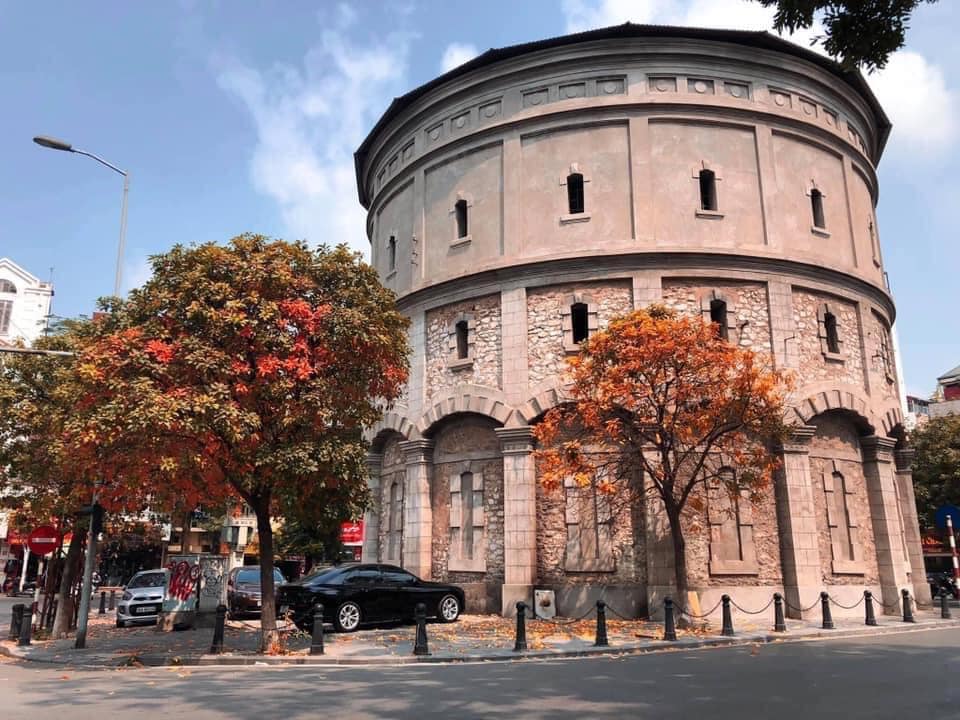
The tower stands out for its simple yet solid defensive-like design:
- A circular stone structure with a strong, fortress-like appearance
- Very thick walls, built to hold large volumes of water and maintain pressure
- Gothic-style arched windows, reflecting European architectural influence of the late 19th century
Because of its unique shape and age, the tower has become one of the most recognizable colonial-era buildings in Hanoi.
Although it no longer functions as a water facility, Hang Dau Water Tower has been preserved as a cultural and historical site. In recent years, it has occasionally been used for art exhibitions and creative events, where modern installations are displayed inside its historic structure. This blend of old architecture and contemporary art makes it a popular stop for visitors interested in Hanoi’s cultural evolution.
📍Address: 46 P. Hang Dau, Phan Chu Trinh Ward, Hoan Kiem District, Hanoi, Vietnam
👉 Entrance fee: Varies depending on exhibitions (often free or ticketed during events)
6. Temple of Literature – A symbol of education and tradition
Temple of Literature was built in 1070 under King Ly Thanh Tong and is dedicated to Confucius. It later became Vietnam’s first national university, where royal students and talented scholars studied for centuries.
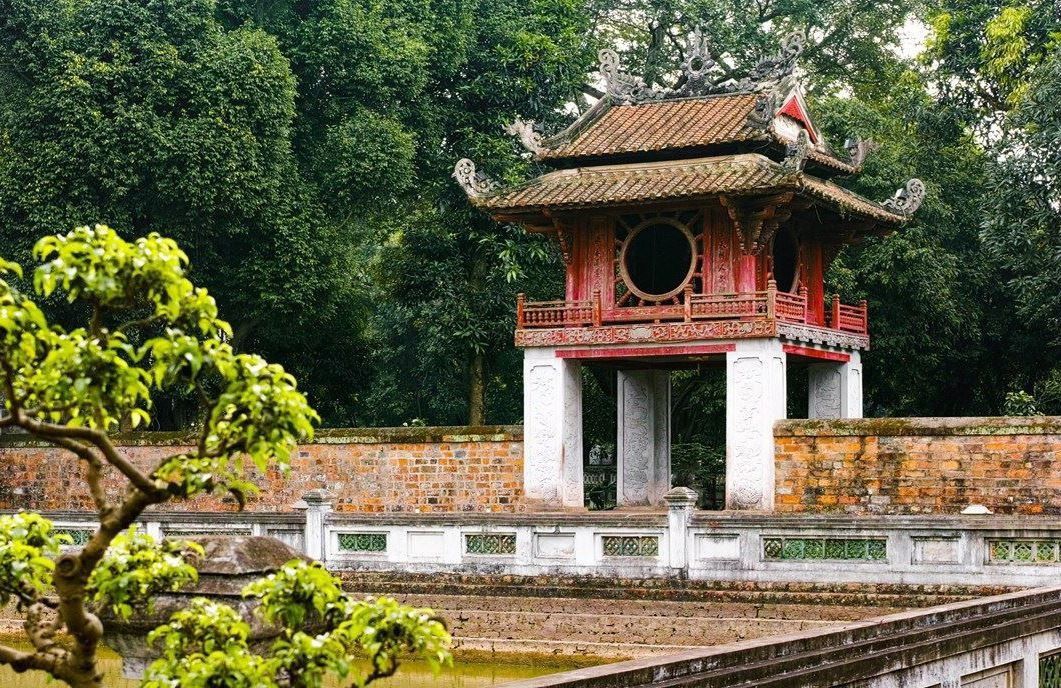
The complex is one of the most important cultural and historical sites in Hanoi, reflecting the long tradition of respect for learning in Vietnamese society.
Main areas (5 courtyards)
The site is divided into five courtyards, each with its own function and meaning:
- First courtyard: Peaceful entrance area with old trees and pathways
- Second courtyard: Featuring ponds and gardens symbolizing harmony
- Third courtyard: Home to the famous Khue Van Cac (Khue Van Pavilion) – a symbol of Hanoi
- Fourth courtyard: Houses the main temple dedicated to Confucius and scholars
- Fifth courtyard: Formerly used for teaching activities at Quoc Tu Giam
Notable highlights
- Khue Van Cac: The iconic red pavilion, often used as a symbol of Hanoi
- 82 stone steles: Inscribed with names of doctoral graduates from past dynasties
- Traditional gardens and ponds: Representing balance between nature and education
The architecture reflects Confucian values such as harmony, discipline, and respect for knowledge.
📍 Address: 58 Quoc Tu Giam Street, Dong Da District, Hanoi, Vietnam
👉Detailed ticket prices for Van Mieu – Quoc Tu Giam (2026 reference):
- Adults: 70,000 VND per visit
- Students (Vietnamese): 35,000 VND per visit (student ID required)
- Elderly (60+ years old) and people with severe disabilities: 35,000 VND per visit (ID required)
- Children under 16 years old: Free admission
7. One Pillar Pagoda – A unique Buddhist structure
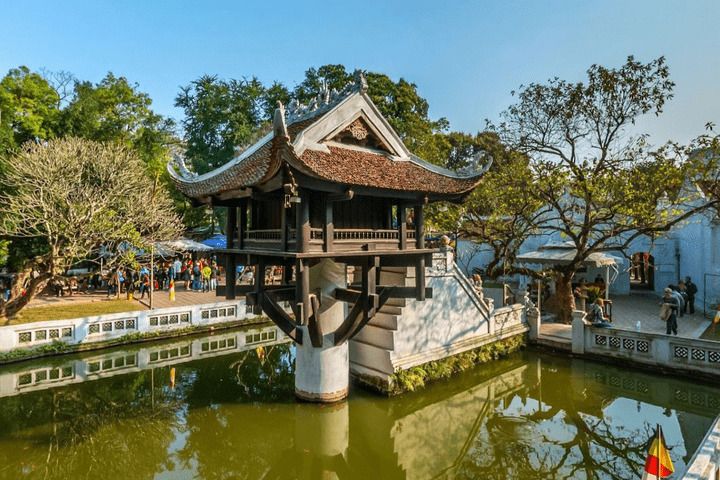
The One Pillar Pagoda is one of the most iconic landmarks in Hanoi. It was originally built in 1049 under Emperor Ly Thai Tong. According to legend, the emperor dreamed of Avalokiteshvara (Quan Am) sitting on a lotus flower and offering him a child. After that, he ordered the construction of the pagoda as a symbol of gratitude and spiritual wish.
Architecture and design
- Built on a single stone pillar rising from a lotus pond
- The wooden pagoda on top represents a lotus flower blooming above water
- The lotus symbolizes purity and enlightenment in Buddhism
- The structure has been restored several times throughout history
The pagoda is considered one of the most unique Buddhist architectural works in Asia. Despite its small size, it carries deep spiritual meaning and is an important symbol of Hanoi’s heritage. Today, it is part of the Ho Chi Minh Mausoleum complex, attracting both worshippers and tourists.
👉 Entrance fee: Free
📍 Address: Chua Mot Cot, Ong Ich Khiem Street, Ba Dinh District, Hanoi, Vietnam
8. Ngoc Son Temple & Hoan Kiem Lake – The cultural heart of Hanoi
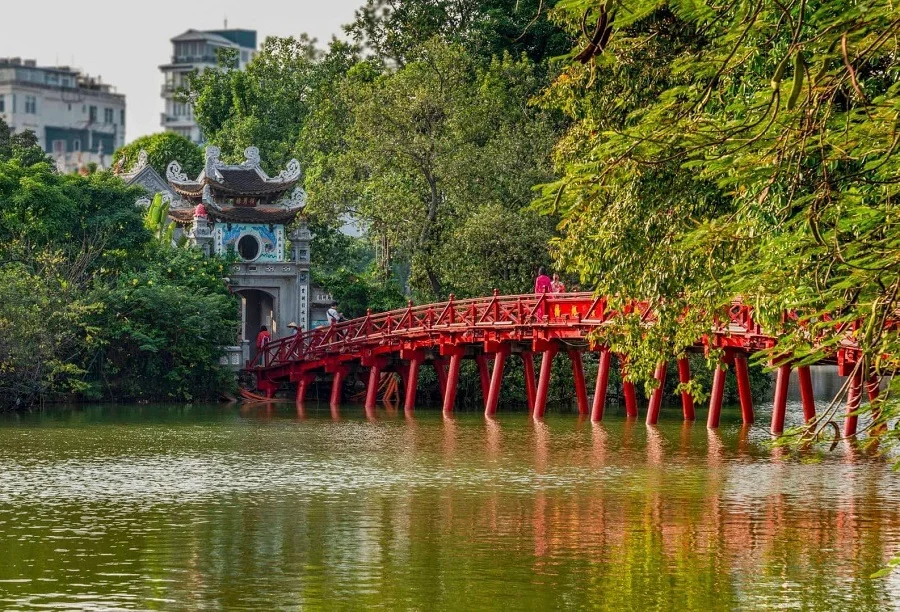
Hoan Kiem Lake (Lake of the Returned Sword) is one of the most famous landmarks in Hanoi. It is closely linked to the legend of Emperor Le Loi, who used a magical sword to defeat invaders and later returned it to a golden turtle living in the lake. Because of this story, the lake carries deep historical and symbolic meaning for Vietnamese people.
Hoan Kiem Lake
The lake is located in the center of Hanoi and is a popular place for walking, relaxing, and cultural activities. It is surrounded by shaded trees, walking paths, and historic buildings, making it a peaceful escape in the middle of the city.
Ngoc Son Temple
Ngoc Son Temple sits on a small island in the northern part of the lake and is accessible via the famous red Huc Bridge.
The temple honors important historical and cultural figures such as:
- General Tran Hung Dao, a national hero who defended Vietnam against Mongol invasions
- Van Xuong De Quan, a deity associated with literature and education
Together, the lake and temple form one of Hanoi’s most important cultural and spiritual sites, blending history, legend, and daily life.
👉 Entrance fee: ~30,000 VND – 50.000 VND
📍 Address: Ngoc Son Temple, Dinh Tien Hoang Street, Hoan Kiem District, Hanoi, Vietnam
9. Tran Quoc Pagoda – The oldest pagoda in Hanoi
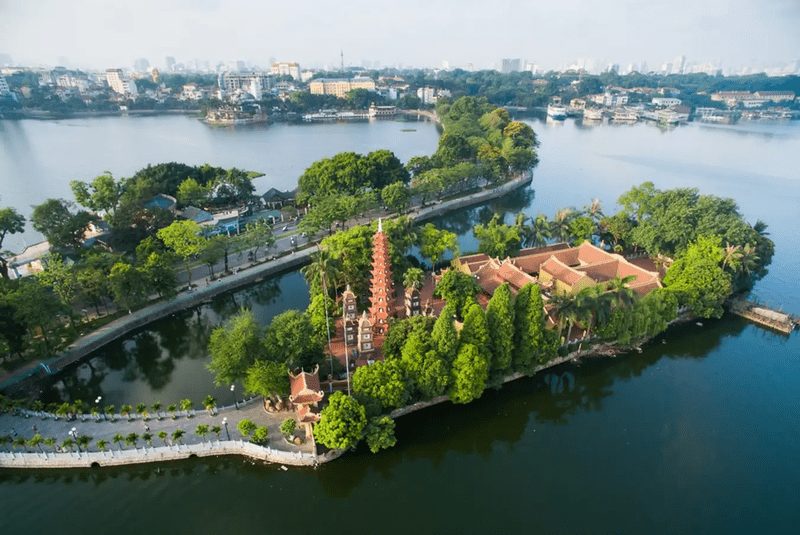
Tran Quoc Pagoda is considered the oldest Buddhist pagoda in Hanoi, with a history of over 1,500 years. It was originally built in the 6th century during the reign of Emperor Ly Nam De and later moved to its current location in the 17th century. The pagoda has long been an important center of Buddhism in Vietnam.
Highlights
- 11-story lotus tower: A striking red stupa built in the main courtyard, symbolizing Buddhist enlightenment
- West Lake location: Situated on a small island in West Lake, offering beautiful water views and a calm atmosphere
- Peaceful setting: Surrounded by trees, gardens, and water, creating a quiet spiritual space in the city
Tran Quoc Pagoda is not only a religious site but also a symbol of Hanoi’s long Buddhist tradition. It attracts both pilgrims and tourists seeking peace and cultural understanding.
👉 Entrance fee: Free
📍 Address: Thanh Nien Street, Tay Ho District, Hanoi, Vietnam
10. Hoa Lo Prison – A powerful historical relic
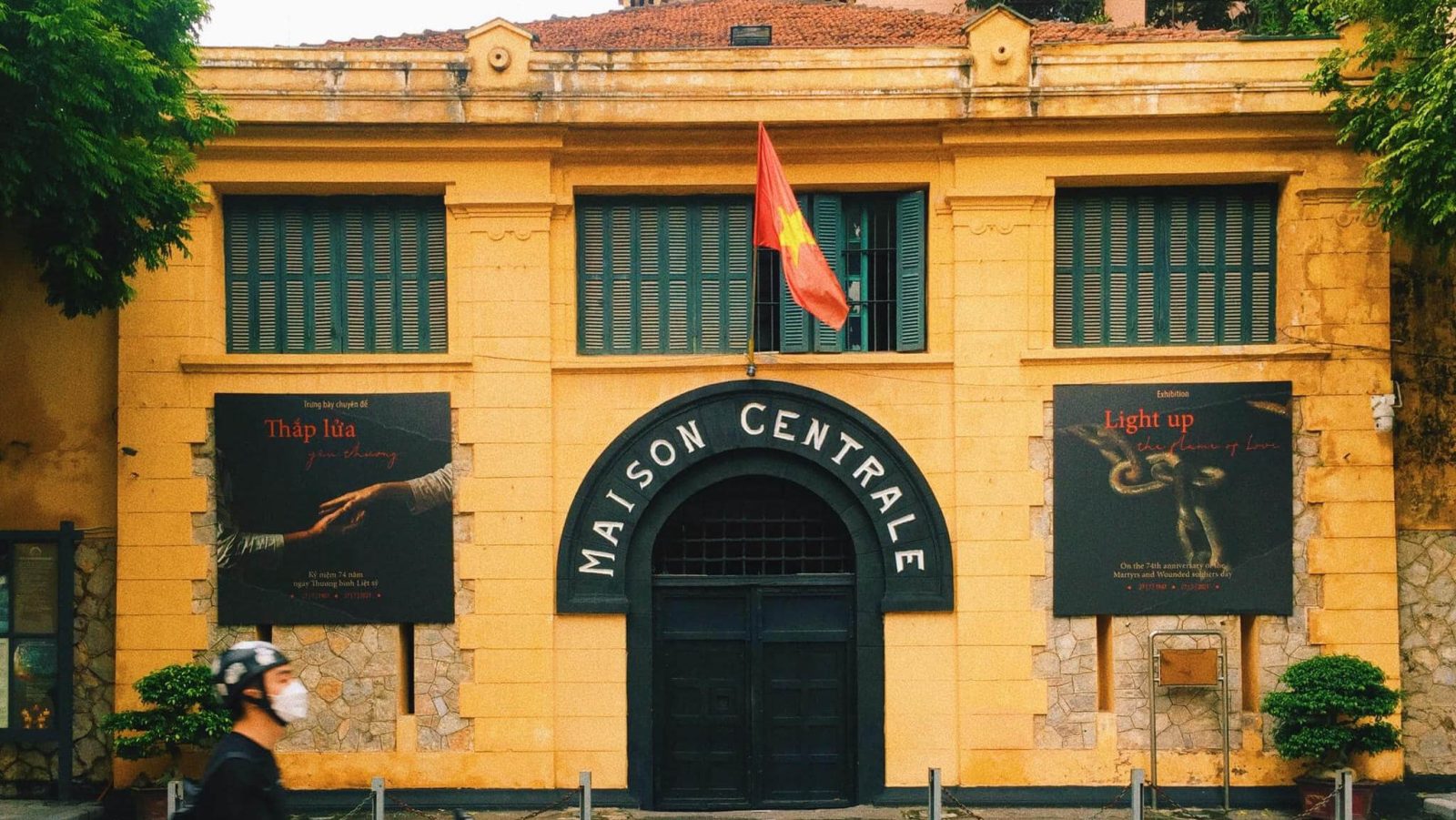
Hoa Lo Prison was built by the French in the late 19th century during the colonial period. It was originally used to detain Vietnamese revolutionaries and political prisoners. Later, during the Vietnam War, it also held American prisoners of war, who famously referred to it as the “Hanoi Hilton.”
Key features
- Thick stone walls and heavily fortified structures
- Cells designed for harsh and restrictive conditions
- Exhibits showing Vietnam’s struggle for independence and wartime history
👉 Entrance fee: ~30,000 VND
📍 Address: 1 Hoa Lo Street, Tran Hung Dao Ward, Hoan Kiem District, Hanoi, Vietnam
11. Ho Chi Minh Stilt House – A symbol of simplicity
Located inside the Presidential Palace complex, this simple wooden stilt house was where President Ho Chi Minh lived and worked from 1958 until his final years. Instead of residing in the grand palace, he chose this modest home to reflect his humble lifestyle and close connection to nature.
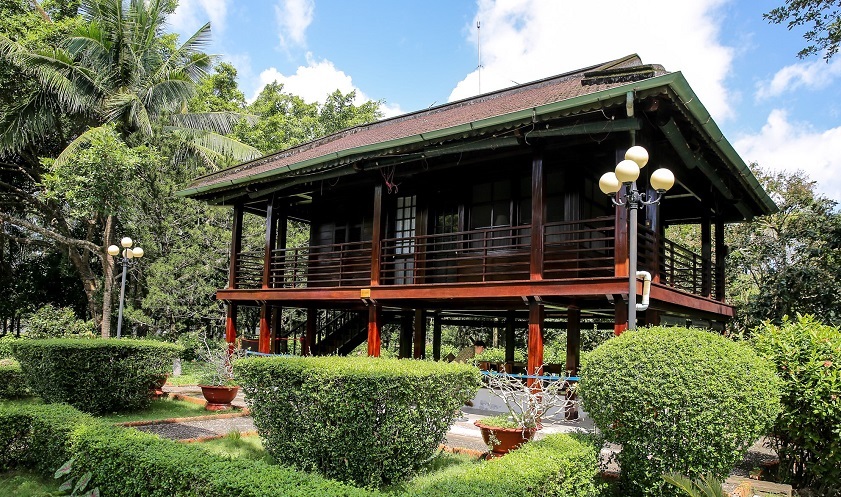
Highlights
- Traditional Vietnamese stilt house design
- Minimalist interior with simple furniture and books
- Peaceful gardens and fish pond surrounding the house
👉 Entrance fee: Included in Presidential Palace complex ticket (~40,000 VND)
📍 Address: 1 Hoang Hoa Tham Street, Ba Dinh District, Hanoi, Vietnam
12. Co Loa Citadel – Vietnam’s oldest capital
Co Loa Citadel is one of the most ancient historical sites in Vietnam, dating back to the 3rd century BC under King An Duong Vuong, ruler of the Au Lac Kingdom. It served as the capital and a major military stronghold.
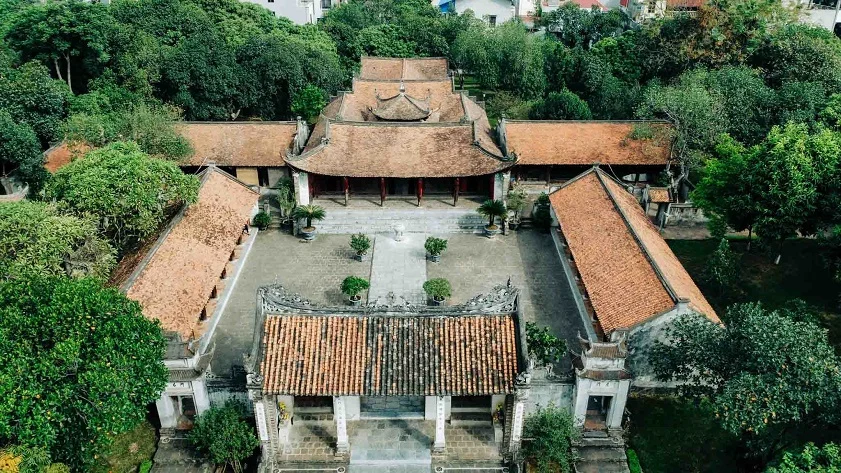
Key features
- Unique spiral-shaped layout of defensive walls
- Massive earthen ramparts built for ancient warfare protection
- Archaeological remains reflecting early Vietnamese civilization
👉 Entrance fee: Varies (~20,000–30,000 VND depending on area)
📍 Address: Co Loa Commune, Dong Anh District, Hanoi, Vietnam
13. Thang Long Four Sacred Temples – Spiritual guardians of the ancient capital
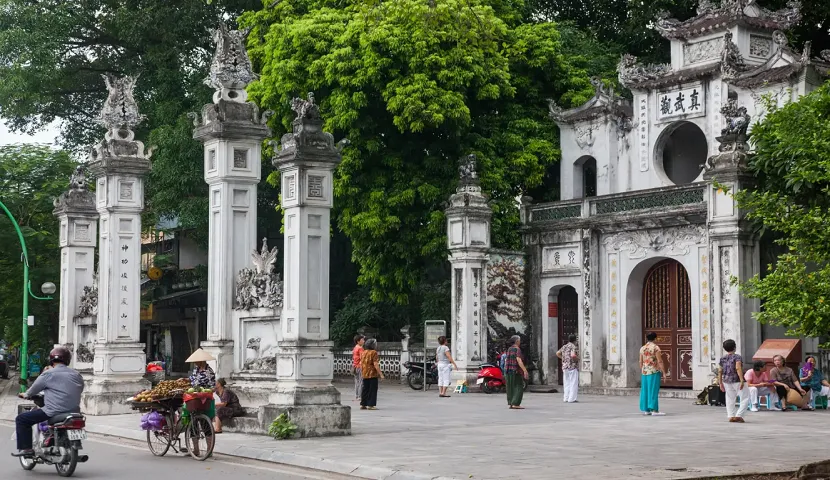
The Four Sacred Temples (Tu Tran Thang Long) are a group of temples believed to protect the four directions of ancient Hanoi:
- Bach Ma Temple (East)
- Voi Phuc Temple (West)
- Kim Lien Temple (South)
- Quan Thanh Temple (North)
Each temple is dedicated to a guardian deity and reflects traditional Vietnamese beliefs about spiritual protection, balance, and harmony of the capital.
👉 Entrance fee: Free or small donation (varies by temple)
Conclusion – 13 Historical Sites in Hanoi
Hanoi is a city where history, culture, and spirituality are deeply intertwined. From ancient citadels like Co Loa, sacred temples such as Van Mieu – Quoc Tu Giam, and iconic landmarks like the One Pillar Pagoda, to colonial relics like the Hoa Lo Prison and Hang Dau Water Tower, each site tells a different chapter of Vietnam’s long and complex story.
Together, these landmarks reflect Hanoi’s unique identity — a blend of tradition and modern life, resilience through history, and strong cultural heritage. Exploring them offers not only sightseeing experiences but also a deeper understanding of Vietnam’s past and present.
If you would like more information about these attractions, travel tips, or a detailed Hanoi itinerary, feel free to reach out to us. We are always happy to help you plan your visit and make your experience in Hanoi more memorable.
👉 Contact us here for more details or personalized recommendations.
WhatsApp Hotline: +84965514942.
Email: info@vietnamjourneysgroup.com