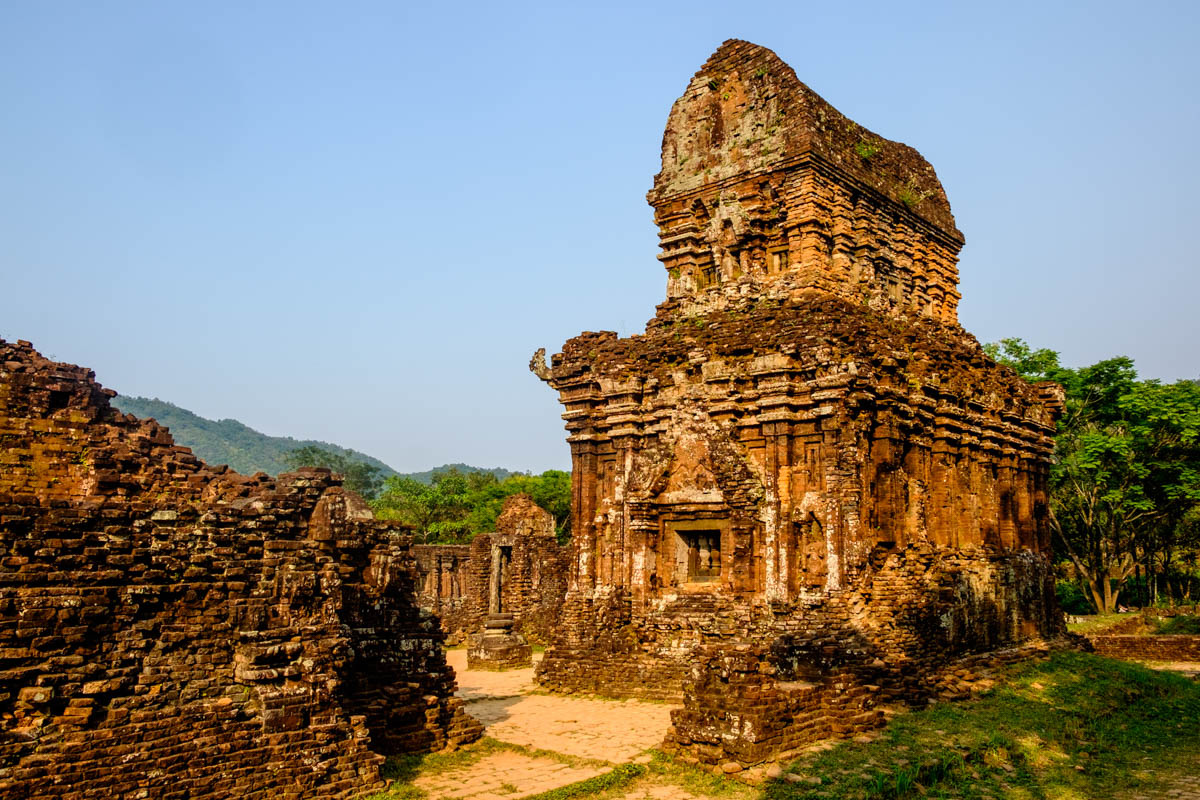
My Son Sanctuary Day Trip from Da Nang: Complete Travel Guide 2026. If you are staying in Central Vietnam, a day trip from Da Nang to My Son Sanctuary is one of the most meaningful cultural experiences you can have. Located just about 1.5–2 hours away, this ancient site offers a completely different atmosphere from the modern coastal city of Da Nang.
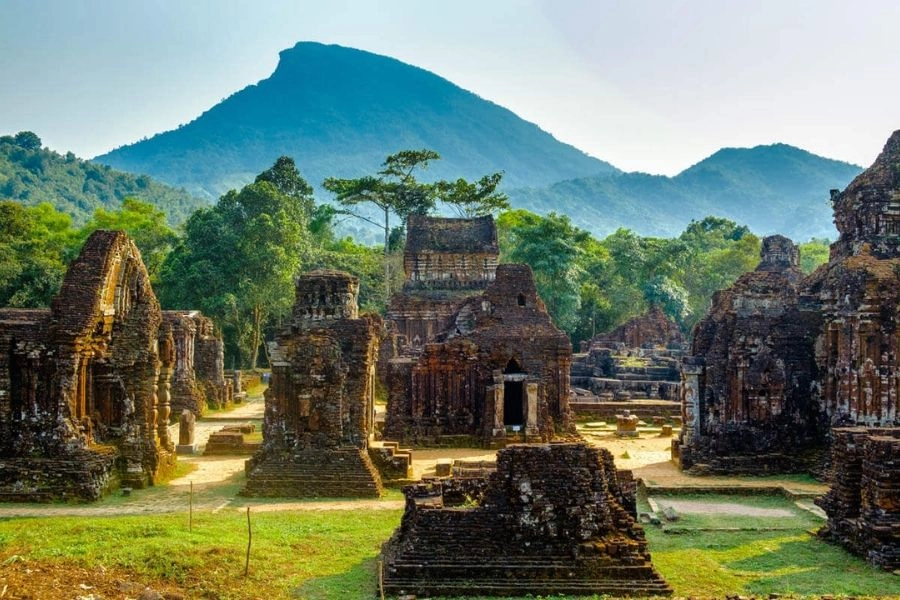
My Son Sanctuary was once the spiritual and political center of the Champa Kingdom, and today it is a UNESCO World Heritage Site filled with mystery, history, and stunning ancient ruins hidden in a lush valley.
This guide will help you plan the perfect day trip in 2026, including how to get there, what to see, and practical travel tips.
Where is My Son Sanctuary?
My Son Sanctuary is located in Duy Xuyen District, Quang Nam Province, about 40–45 km southwest of Da Nang, Vietnam.
Distance from Da Nang: ~40 km
Travel time: 1.5–2 hours by car or tour bus
Setting: A secluded valley surrounded by mountains, dense jungle, and natural landscapes
The location itself is a major part of its appeal. My Son feels remote, quiet, and deeply atmospheric, offering a strong contrast to modern urban life. The ruins are hidden in a green valley, which enhances the feeling of stepping into an ancient sacred space.
🎟️ Ticket prices (reference):
- Foreign visitors: 150,000 VND
- Vietnamese visitors: 100,000 VND
🕒 Opening hours (reference): 6:00 AM – 5:00 PM, Monday to Sunday
What is My Son Sanctuary?
My Son Sanctuary was the religious, political, and cultural center of the ancient Champa Kingdom, which ruled large parts of Central and Southern Vietnam from around the 2nd to the 19th century. Today, it is one of the most important archaeological sites in Vietnam and a designated UNESCO World Heritage Site.
The sanctuary is located in a narrow valley surrounded by mountains, which was historically considered a sacred space. The natural landscape was intentionally chosen by the Cham people to reflect their spiritual belief system and connection between nature, gods, and kings.
🏛️ Historical background
My Son was continuously developed over many centuries, mainly between the 4th and 14th centuries, with different kings adding temples and restoring older structures. It served as a place for royal ceremonies, religious rituals, and burial sites for Cham kings.
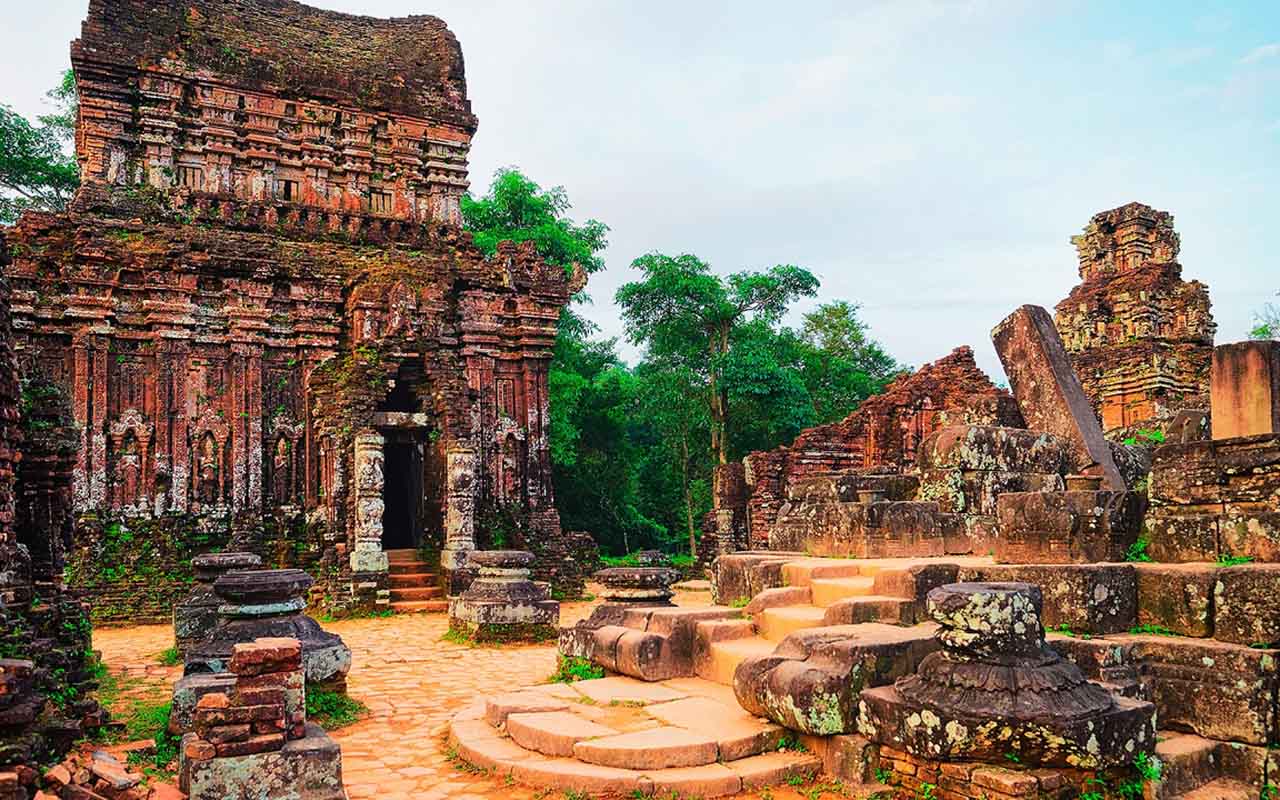
The site reflects the long evolution of Champa civilization, influenced by Indian culture, particularly Hinduism. This influence is clearly seen in the architecture, inscriptions, and religious symbolism found throughout the complex.
🕉️ Religious significance
The sanctuary was primarily dedicated to the Hindu god Shiva, one of the most important deities in Hinduism. Shiva was worshipped as the protector and destroyer, symbolizing both creation and destruction.
- Rituals performed here included:
- Royal blessings and coronation ceremonies
- Religious offerings and sacrifices
- Ceremonies for deceased kings
- Seasonal Hindu festivals
The temples were considered a sacred bridge between humans and the divine world.
🏛️ Architecture & Cultural Experience at My Son Sanctuary
The architecture of My Son Sanctuary is highly distinctive, intricate, and deeply historical. The entire site is divided into six main architectural styles, reflecting different stages of the Champa civilization’s development: Ancient style, Hoa Lai style, My Son style, Po Nagar style, Dong Duong style, and Binh Dinh style. Each style represents a unique phase in Cham art, religion, and construction techniques.
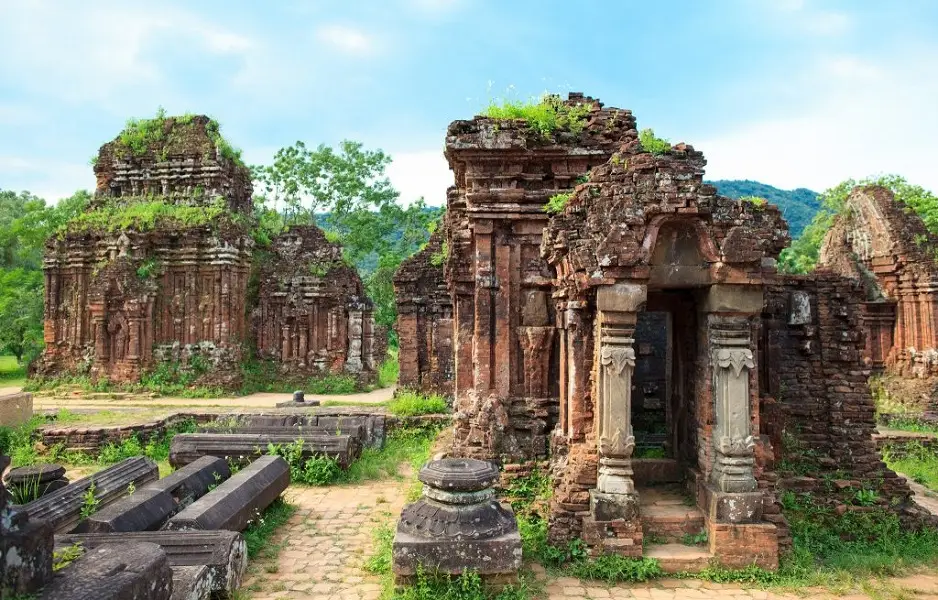
During a visit, tourists can easily observe key features such as stone carvings, statues of the Hindu god Shiva, and Apsara dancers engraved on temple walls. These elements clearly reflect the strong influence of Hinduism and the artistic–spiritual depth of the Champa civilization.
Despite centuries of history and significant destruction, especially from bombing during the Vietnam War, many structures still remain. While some towers were damaged, a large number are still relatively intact, preserving the unique identity of the complex.
1. Exploring the Full Landscape of My Son
My Son Sanctuary consists of more than 70 temple structures featuring highly detailed carvings and important inscriptions in Sanskrit and ancient Cham script. The site was largely forgotten until 1898, when a French archaeologist discovered it hidden in a valley surrounded by two mountain ranges.
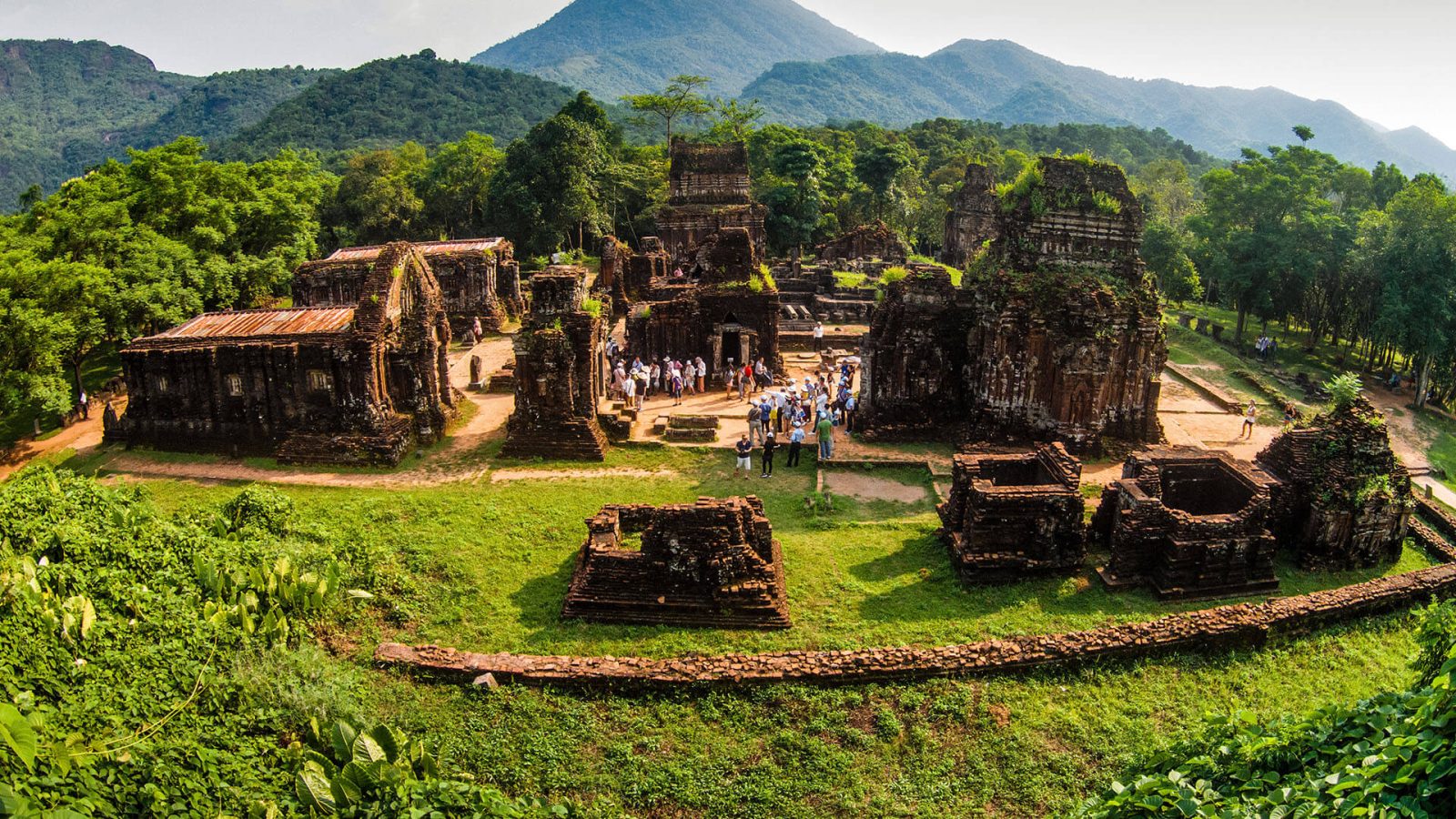
One of its most remarkable features is the Cham brick construction technique. The bricks were fired, cut, and carefully stacked without visible binding materials, yet the structures have remained standing for centuries. This remains a major mystery for researchers.
Many temple towers are still relatively well preserved, creating a timeless, ancient atmosphere surrounded by forested mountains.
2. The Unique 8-Meter Ancient Road
One of the most important discoveries at My Son is an ancient ceremonial road approximately 8 meters wide, uncovered during restoration work. The road features two parallel walls and lies partially buried underground.
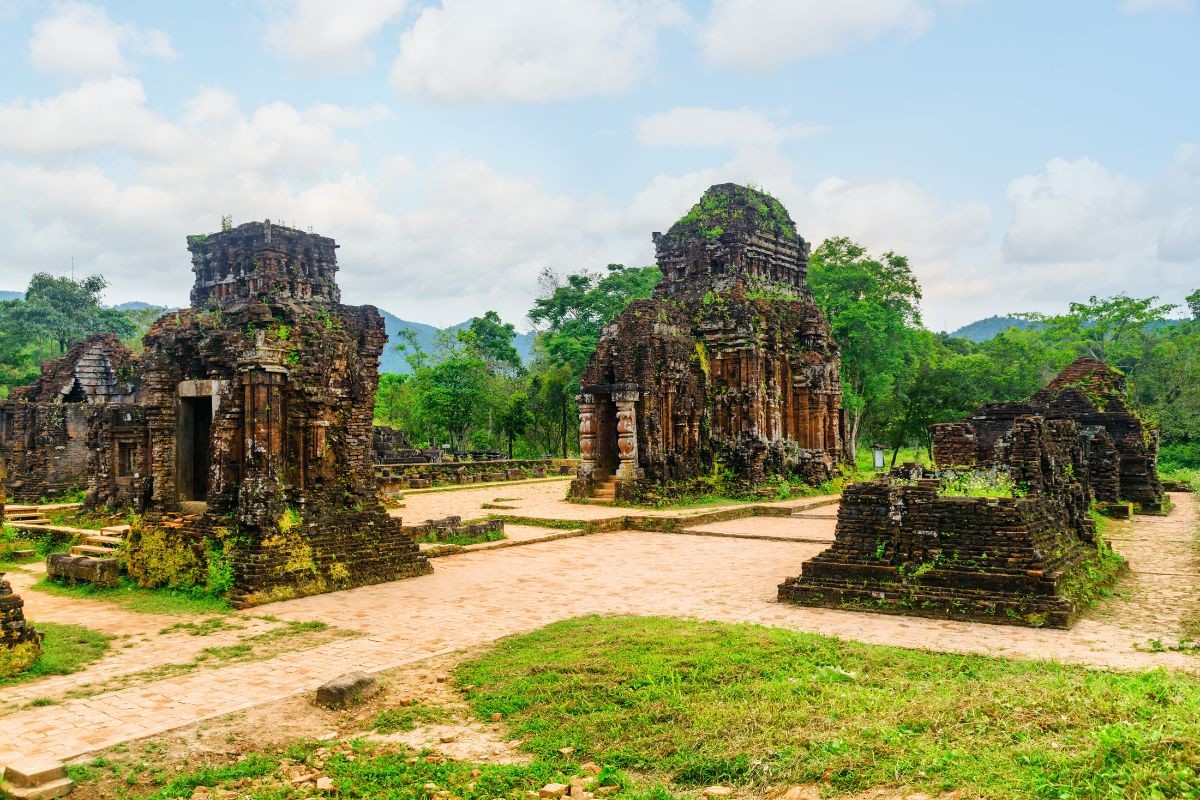
Studies suggest this road once led directly to the sacred central area, where a large gate temple was used for important rituals. Only kings, royal family members, and high-ranking officials of Champa were allowed to enter this sacred zone.
The finely carved walls along the road highlight its importance in the political and religious life of the ancient kingdom.
3. The Enchanting Apsara Dance
One of the most captivating cultural experiences at My Son is the traditional Apsara dance, inspired by the carved Apsara figures found on temple walls.
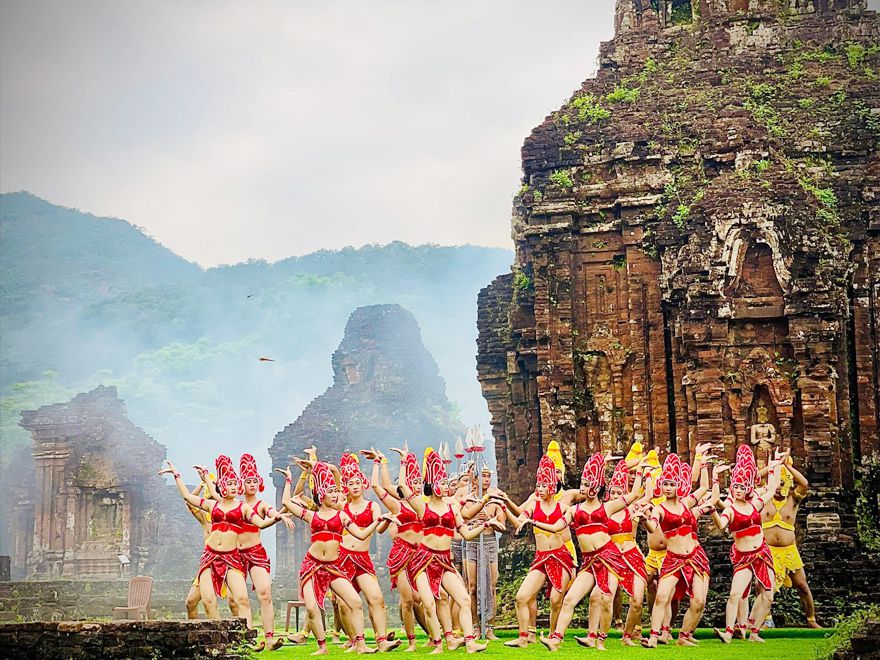
The dance is graceful and fluid, often described as the “soul of stone,” symbolizing beauty, elegance, and spiritual harmony in Cham culture. Dancers wear vibrant traditional costumes and perform delicate hand movements.
The performance is accompanied by traditional instruments such as:
- Paranung drums
- Saranai horns
The combination of music and dance creates an immersive cultural experience that transports visitors back to the ancient Champa era.
4. The Traditional Katê Festival
The Katê Festival is one of the most important traditional festivals of the Cham people, usually held around July according to the Cham calendar. If your visit coincides with this event, you will experience a vibrant cultural celebration at My Son.
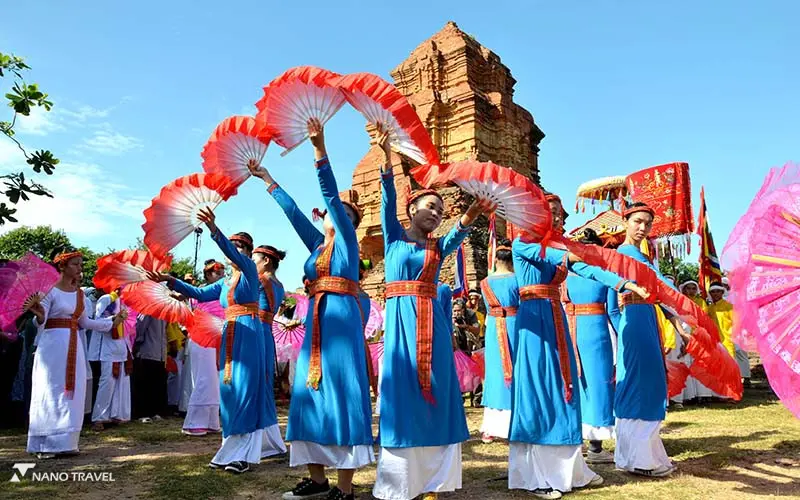
During the festival, visitors can witness:
- Traditional religious ceremonies
- Costume processions
- Ritual offerings and prayers for peace
- Cultural performances and traditional dances
The atmosphere is both sacred and lively, offering a deeper understanding of Cham spiritual beliefs and cultural heritage.
🍜 Local Specialties near My Son Sanctuary
When visiting My Son Sanctuary, you can also enjoy many famous Quang Nam specialties in nearby areas such as Duy Xuyen and Hoi An. These dishes are rich in local flavor and deeply connected to Central Vietnam’s culinary culture.
Cau Mong Roasted Veal (Bê thui Cầu Mống)
Cau Mong roasted veal is one of the most famous dishes you should try when visiting My Son.
The main ingredient is young veal, usually weighing under 30 kg, carefully selected from grass-fed calves. The meat is slowly roasted over charcoal fire, which helps preserve its natural sweetness while keeping the skin slightly crispy and chewy.
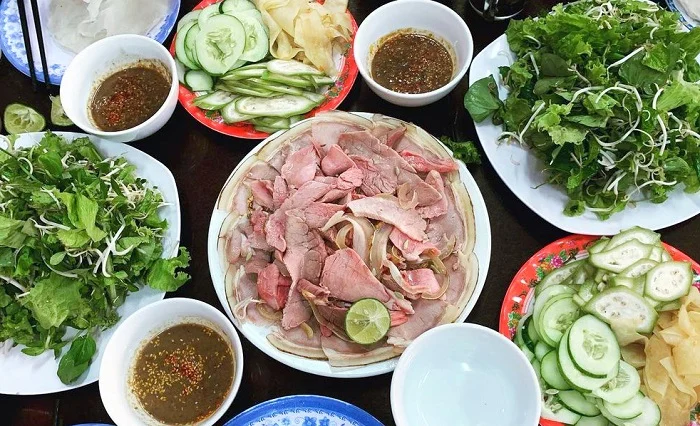
After roasting, the meat is sliced thinly and served with fresh herbs and rice paper. What makes this dish truly special is its dipping sauce.
The sauce is a perfect blend of:
- Fermented fish sauce
- Lime juice
- Roasted sesame
- Garlic and chili
This combination creates a bold, balanced flavor that is both rich and refreshing.
Phu Chiem Noodles (Mì Phú Chiêm)
Phu Chiem noodles are a traditional Quang Nam dish known for their simple but unforgettable taste.
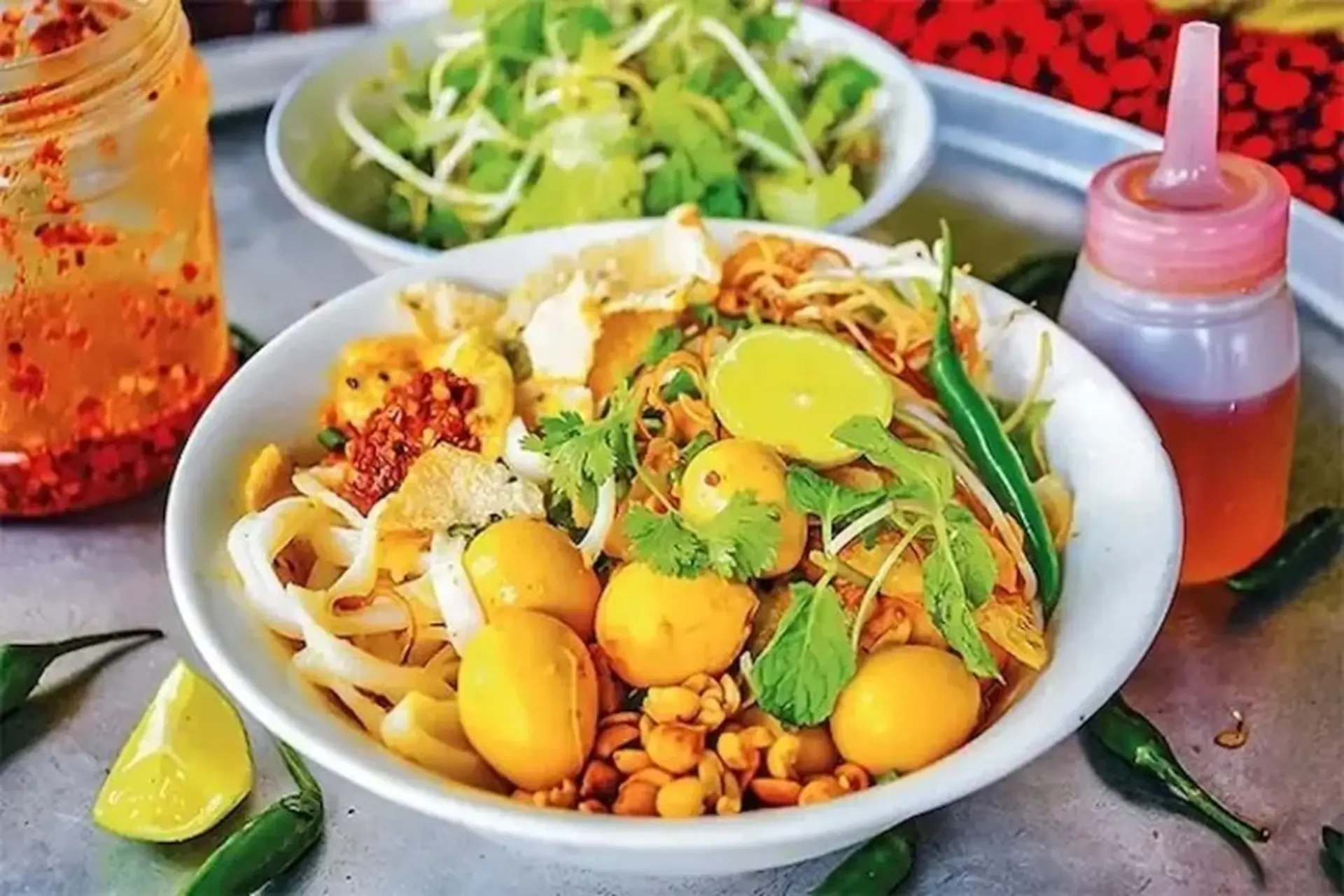
The noodles are made from high-quality rice grown along the Thu Bon River, giving them a soft yet chewy texture. They are usually served with pork belly, shrimp, and a small amount of savory broth or seasoning sauce.
The dish is typically eaten with a variety of fresh herbs such as:
- Bean sprouts
- Water spinach
- Aromatic herbs
- Lettuce
A touch of chili adds a mild spicy kick, enhancing the overall flavor.
👉 This dish is light but very flavorful, making it a local favorite.
Banh To (Traditional Sticky Rice Cake)
Banh To is a traditional Quang Nam cake often prepared during Tet (Lunar New Year) celebrations.
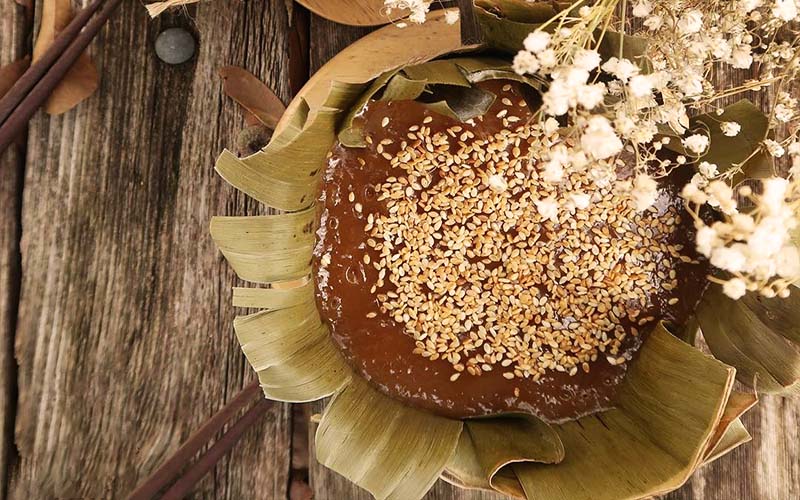
It is made from two main ingredients:
- Glutinous rice
- Brown sugar or sugar cane syrup
The cake has a chewy texture and a naturally sweet flavor. It can be eaten in different ways:
- Directly as it is
- Steamed for a softer texture
- Fried for a crispy outer layer
👉 Banh To is not only a dessert but also a cultural symbol of local traditions during festive seasons.
How to Get to My Son Sanctuary
🛣️ 1. From Da Nang to My Son Sanctuary
There are several convenient ways to travel from Da Nang to My Son Sanctuary, with the most common options being public bus, private car, and motorbike. The distance is around 60 km, making it a popular day trip.
🚌 By Bus (Route 06 Da Nang – My Son)
The public bus is the most budget-friendly option.
- Route: Bus 06 from Da Nang Central Bus Station to My Son
- Distance: ~60 km
- Operating hours (reference): 5:30 AM – 5:00 PM daily
- Frequency: Every 30 minutes
- Ticket price: Around 8,000 – 30,000 VND per trip
👉 This is the cheapest option, suitable for independent travelers, although travel time may be longer and less flexible.
🚗 By Car or 🏍️ Motorbike (Self-travel)
For more flexibility, many travelers choose to go by private car or motorbike.
Suggested route:
- From Da Nang, follow National Highway 1A to Nam Phuoc town (~39 km)
- Continue west on Road 537 for about 9 km to Tra Kieu
- From Tra Kieu, go another 12 km to a junction
- Turn left and follow signs for about 9 km to My Son area
- From the entrance, travel a short mountain road (~5 minutes) and then walk along a stone path into the site
👉 Motorbike travel is especially popular among young travelers for its freedom and scenic countryside views.
🛣️ 2. From Hoi An to My Son Sanctuary
My Son Sanctuary is located about 50 km from Hoi An, making it another popular day-trip destination.
🏍️ By Motorbike
The most common option for backpackers is riding a motorbike.
- Route: From Hoi An, go via Hung Vuong Street → join National Highway 1A → continue to My Son
- Travel time: Around 2 hours
- 👉 This route is scenic and passes through rural landscapes, rice fields, and local villages.
💰 Motorbike rental information
- Price: 150,000 – 200,000 VND per day
- Tip: Always check fuel level before departure and fill up the tank
- Important: Check weather conditions before traveling, especially during rainy season
Traveling to My Son Sanctuary is relatively easy and offers a beautiful journey through Central Vietnam’s countryside.
Best Time to Visit My Son
- Best time of day: Early morning (cooler, fewer crowds)
- Best season: Dry season (February – August)
- Avoid: Midday heat in summer months
Morning light also makes photography much more beautiful.
🌿 Conclusion – My Son Sanctuary Day Trip from Da Nang
My Son Sanctuary is not only an ancient archaeological site but also a powerful symbol of the Champa civilization’s history, religion, and artistic achievement. Hidden in a quiet valley surrounded by mountains and jungle, the sanctuary offers a unique atmosphere where nature and history blend together.
Despite centuries of damage and the impacts of war, many temple structures still remain, allowing visitors to witness the remarkable architecture, spiritual symbolism, and cultural depth of an extinct kingdom. From intricate brick towers and Hindu carvings to traditional Apsara dances and nearby local cuisine, My Son provides a rich and immersive cultural experience.
Easily accessible from both Da Nang and Hoi An, it is an ideal day trip destination for travelers who want to explore Vietnam beyond beaches and cities.
Overall, My Son Sanctuary is a place where history comes alive—quiet, sacred, and deeply inspiring for anyone interested in culture, archaeology, and ancient civilizations.
📩Contact us here to get a free itinerary and quotation.
WhatsApp Hotline: +84965514942.
Email: info@vietnamjourneysgroup.com