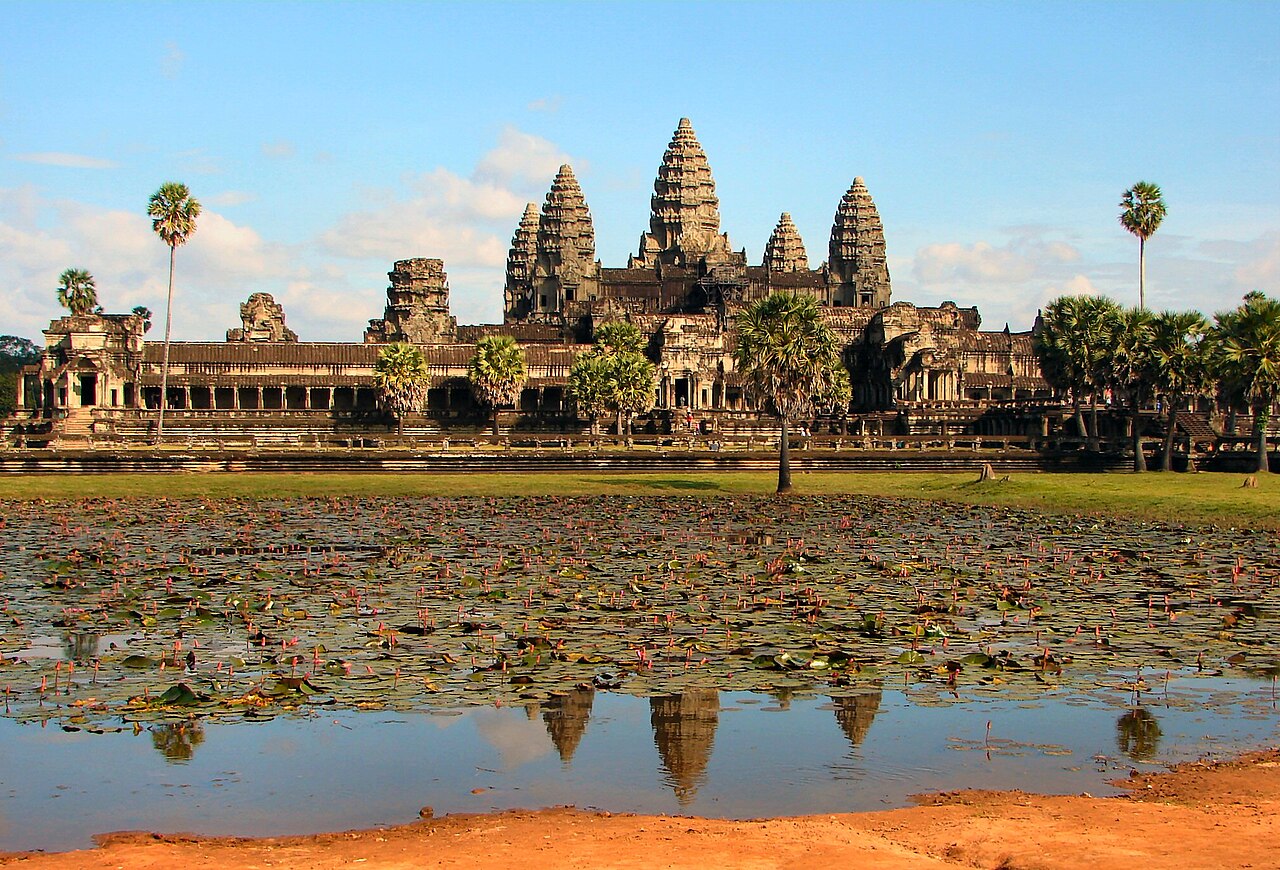
Angkor Wat: The Timeless Symbol of Cambodia – Travel Guide & Things to Do. Located deep within the tropical forests of Cambodia, Angkor Wat is not only a magnificent architectural masterpiece but also the spiritual symbol of an entire nation. Proudly featured on Cambodia’s national flag, Angkor Wat represents the country’s history, identity, and cultural pride.
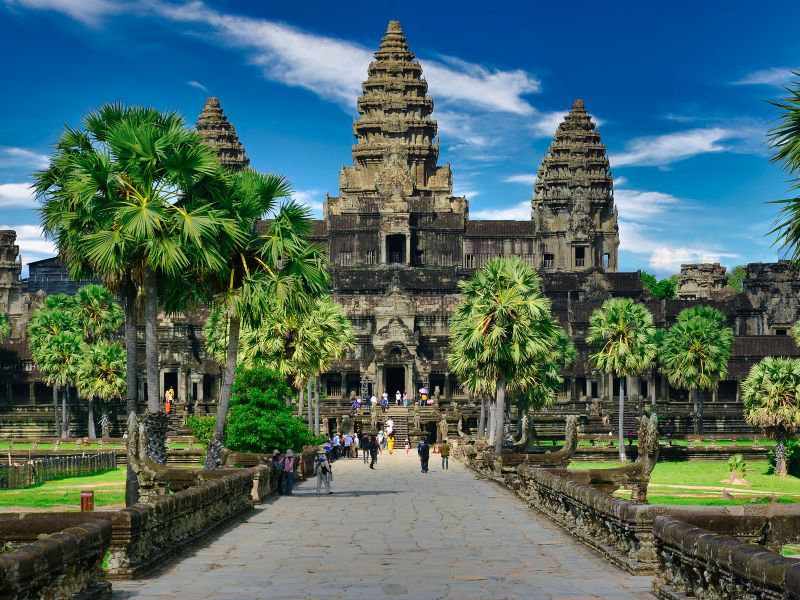
For travelers, Angkor Wat is one of the most breathtaking destinations in the world—a place where past and present blend seamlessly in every ancient stone. This guide will walk you through everything you need to know, from its history and architecture to travel tips and must-do experiences.
Angkor Wat Overview
Angkor Wat is located near the city of Siem Reap, within the vast Angkor Archaeological Park—one of the most important UNESCO World Heritage Sites in Southeast Asia.
Covering over 160 hectares, Angkor Wat is the largest religious monument in the world. It features towering stone structures, surrounding moats, and long galleries filled with intricate carvings. Beyond being a tourist attraction, it holds deep spiritual significance, reflecting the beliefs and worldview of the ancient Khmer civilization.
History of Angkor Wat
1. The Construction of Angkor Wat and the Khmer Empire
Angkor Wat was constructed in the early 12th century during the reign of Suryavarman II, at a time when the Khmer Empire was at its peak in terms of power, territory, and cultural influence. The temple complex was originally built as a state temple and capital city, reflecting the political and religious authority of the king.
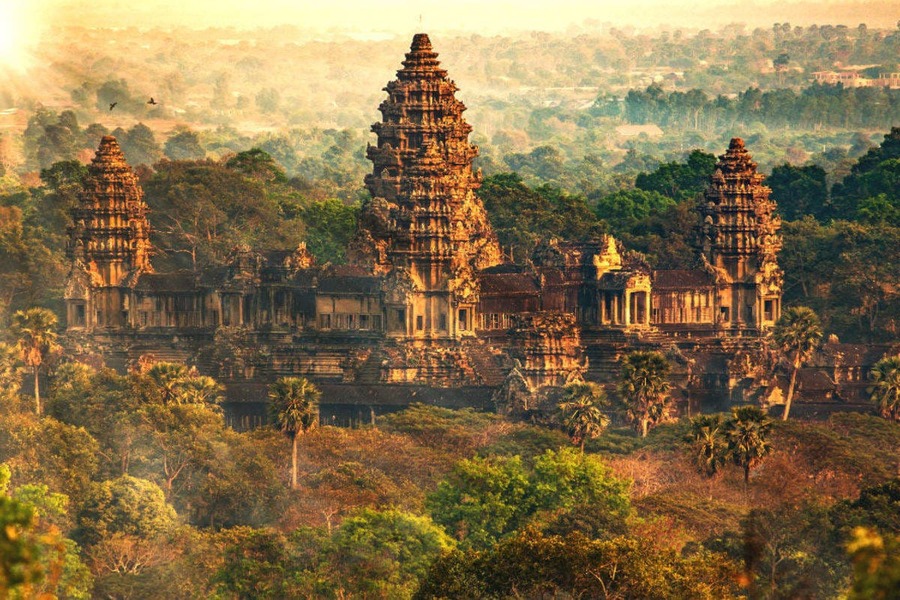
Unlike ordinary religious structures, Angkor Wat was designed as a symbol of royal legitimacy. The king was associated with the concept of the “god-king,” where political authority was deeply connected to divine power. The temple was dedicated to Vishnu, one of the most important deities in Hindu tradition, symbolizing protection and cosmic order.
2. Religious and Cosmological Significance
The architecture of Angkor Wat reflects the cosmology of Hinduism. The central towers represent Mount Meru, the mythical center of the universe and the home of the gods. The surrounding moat symbolizes the cosmic ocean that encircles the world, while the temple walls represent mountain ranges.
Every architectural element was carefully designed to express a spiritual vision of the universe. This integration of religion and engineering demonstrates the advanced knowledge and artistic sophistication of the Khmer civilization. The detailed bas-reliefs also depict scenes from Hindu epics such as the Ramayana and Mahabharata, reinforcing the temple’s religious importance.
3. Transition to Buddhism and Continuous Use
From the 13th century onward, the region gradually shifted from Hinduism to Buddhism, particularly Theravada Buddhism. Unlike many ancient temples that were abandoned or destroyed, Angkor Wat was peacefully adapted for Buddhist worship.
Buddhist statues and iconography were added while the original Hindu structure remained intact. This religious transformation allowed the temple to remain an active spiritual site for centuries, contributing significantly to its preservation. The coexistence of Hindu and Buddhist elements makes Angkor Wat a unique example of cultural and religious continuity.
4. Decline of the Khmer Empire and Abandonment of the Capital
During the 14th and 15th centuries, the Khmer Empire began to decline due to multiple factors, including wars with the Ayutthaya Kingdom, changes in trade routes, and environmental challenges affecting water management systems.
As a result, the capital was gradually moved to the Phnom Penh region. Although Angkor lost its status as a political and administrative center, Angkor Wat itself was never completely abandoned. Buddhist monks and local communities continued to maintain the site, while the surrounding jungle slowly reclaimed much of the ancient city.
5. Rediscovery and Global Recognition
In the 19th century, French explorer Henri Mouhot brought international attention to Angkor Wat through his writings and illustrations. His accounts introduced the temple complex to the Western world, sparking widespread archaeological interest.
Since then, extensive restoration and conservation efforts have been carried out. Today, Angkor Wat stands as a national symbol of Cambodia and is recognized as a UNESCO World Heritage Site by UNESCO. It is considered one of the largest and most significant religious monuments in the world, attracting millions of visitors each year.
6. Legacy and Cultural Importance
Angkor Wat remains a powerful symbol of Khmer identity, history, and artistic achievement. Its architectural scale, religious symbolism, and historical continuity make it one of the most remarkable monuments ever built in human history.
Beyond its religious function, the temple represents the peak of classical Khmer civilization and continues to inspire historians, archaeologists, and travelers worldwide.
Architecture & Design of Angkor Wat
1. Sacred Cosmology as the Foundation of Design
The architecture of Angkor Wat is not simply aesthetic or functional—it is fundamentally based on sacred cosmology derived from Hinduism. The entire temple complex was designed as a physical representation of the universe, where religious belief and architectural planning are inseparably connected.
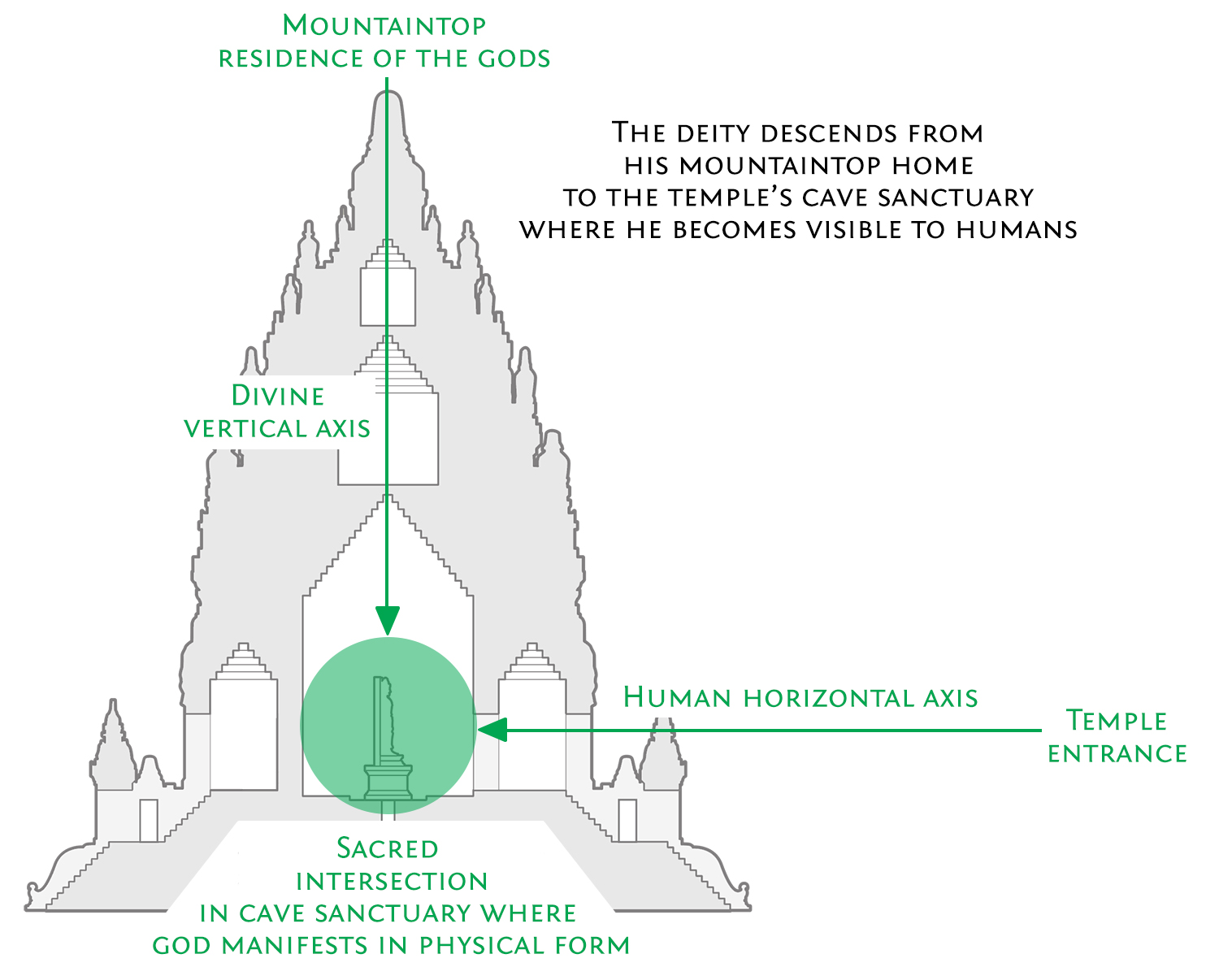
At the center of this design is Mount Meru, the mythical mountain considered in Hindu cosmology as the axis of the universe and the dwelling place of the gods. The temple was intentionally constructed to mirror this cosmic structure, transforming religious philosophy into physical form. This makes Angkor Wat not just a temple, but a symbolic model of the universe itself.
2. Layout, Orientation, and Monumental Scale
One of the most striking features of Angkor Wat is its precise geometric layout. The temple complex is organized on a strict rectangular grid, enclosed by a massive moat that measures approximately 5 kilometers in length. This moat is not merely decorative—it symbolizes the cosmic ocean surrounding Mount Meru.
The temple is oriented toward the west, which is unusual for Hindu temples that typically face east. This orientation has led scholars to suggest multiple interpretations, including its possible connection to Vishnu and funerary symbolism.
The scale of construction is extraordinary. The sandstone blocks used to build the temple were transported from distant quarries, likely using an advanced system of canals and labor organization. The sheer volume of material and labor required reflects the administrative and engineering capabilities of the Khmer Empire.
3. The Five Towers and Symbolism of Mount Meru
At the heart of the temple stands its most iconic feature: the five central towers. These towers are arranged in a quincunx pattern, with one central tower surrounded by four slightly lower towers. This arrangement directly represents the five peaks of Mount Meru in Hindu cosmology.
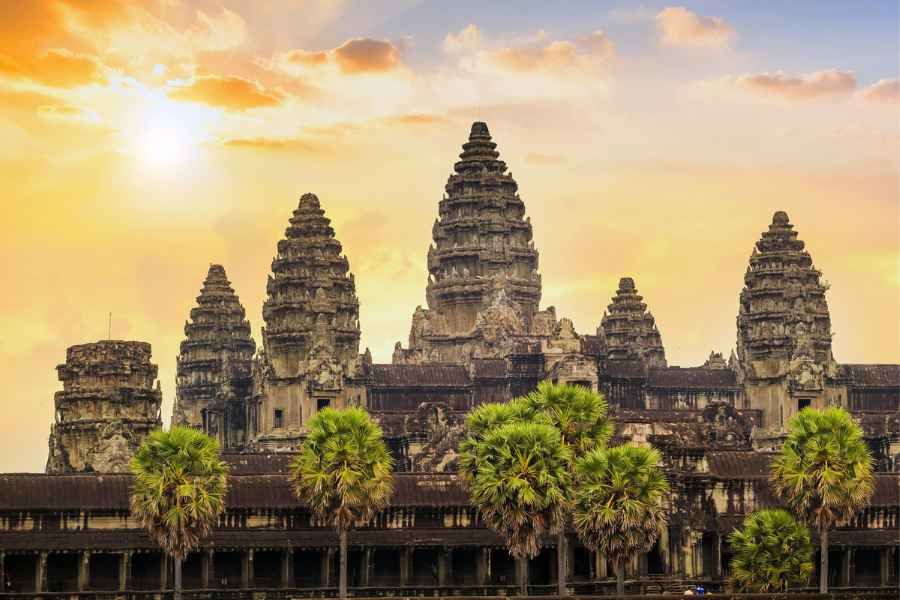
The central tower rises to approximately 65 meters, symbolizing the highest peak and the spiritual center of the universe. The vertical progression from outer galleries to inner sanctum reflects a journey from the earthly world toward the divine realm.
This spatial hierarchy is not accidental—it guides worshippers physically and symbolically through increasing levels of sacredness as they move deeper into the temple.
4. Bas-Reliefs and Narrative Art
The inner and outer galleries of Angkor Wat are richly decorated with extensive bas-relief carvings. These carvings are among the most detailed in the ancient world and serve both artistic and educational purposes.
Key scenes include episodes from the Hindu epics Ramayana and Mahabharata, as well as historical and mythological events such as the Churning of the Ocean of Milk. This famous scene depicts gods and demons working together to extract the nectar of immortality, symbolizing the balance of cosmic forces.
The carvings are not random decorations—they function as a visual narrative system, allowing worshippers to “read” sacred stories while moving through the temple.
5. Engineering Precision and Structural Innovation
The construction of Angkor Wat demonstrates remarkable engineering precision. The sandstone blocks were cut with high accuracy and fitted together without the use of mortar in many areas. This dry-stone technique required exceptional craftsmanship, as each block had to be perfectly shaped to ensure stability.
The foundation system was also highly advanced. Builders used layers of laterite and compacted sand to stabilize the massive structure on the flood-prone plains of Cambodia. This allowed the temple to survive centuries of seasonal flooding and soil movement.
Water management was another key innovation. The surrounding moat and canal systems were part of a broader hydraulic network that controlled water flow, supported agriculture, and stabilized the temple’s environment.
6. Symmetry, Harmony, and Artistic Mastery
One of the defining characteristics of Angkor Wat is its near-perfect symmetry. Every axis of the temple is carefully aligned, and each section mirrors another with precise balance. This symmetry reflects both aesthetic ideals and spiritual principles, representing order in the universe.
The harmony between architecture, sculpture, and landscape creates a unified artistic experience. No element exists in isolation—every wall, corridor, and tower contributes to a larger cosmic design.
The level of detail in the carvings also highlights the extraordinary craftsmanship of the Khmer artisans. Every surface is covered with intricate patterns, divine figures, and narrative scenes, demonstrating not only technical skill but also deep religious devotion.
7. A Masterpiece of Integrated Design
Ultimately, Angkor Wat stands as one of the most sophisticated examples of integrated architecture in human history. It combines religion, engineering, art, astronomy, and political ideology into a single monumental structure.
The temple is not only a place of worship but also a symbolic universe in stone—designed to reflect cosmic order, reinforce royal authority, and express the spiritual worldview of the Khmer civilization.
Best Time to Visit Angkor Wat
The best time to visit Angkor Wat is between November and March, when the weather is cooler and drier. This is also peak tourist season, so planning ahead is essential.
One of the most iconic experiences is watching the sunrise over Angkor Wat. As the sun rises behind the temple’s towers, the entire complex glows in golden light—an unforgettable sight.
Sunset is equally stunning, offering a more tranquil and mystical atmosphere. To avoid crowds, consider visiting early in the morning or exploring less popular areas within the complex.
How to Get There
The most common way to reach Angkor Wat is by flying into Siem Reap, which has an international airport with connections across the region.
From the city center, you can travel to Angkor Wat by tuk-tuk, taxi, or bicycle. Tuk-tuks are the most popular option due to their affordability and authentic local experience.
Angkor Wat Tickets, Entrance Fees & Opening Hours
Visiting Angkor Wat requires an official entry pass to the Angkor Archaeological Park. Tickets must be purchased from official ticket counters only, as unofficial sellers may be scams.
🎟️ Ticket Options and Prices
There are three main types of entrance passes:
1. 1-Day Pass
Price: 37 USD
Validity: 1 day from the date of purchase
This ticket is suitable for visitors who only have a short time and want to explore the main highlights, especially Angkor Wat.
2. 3-Day Pass
Price: 62 USD
Validity: 7 days from the date of purchase
This option allows multiple entries within a week, making it ideal for a more relaxed and in-depth visit.
3. 7-Day Pass
Price: 72 USD
Validity: 1 month from the date of purchase
This pass is best for travelers who want to explore the entire Angkor complex and surrounding temples in detail.
🕒 Opening Hours
The Angkor Archaeological Park is open every day, including weekends and holidays.
- Opening time: 05:00 AM
- Closing time: 17:30 PM
Within this time frame, visitors can freely explore different temples across the site.
Top Things to Do at Angkor Wat
1. Watch the Sunrise at Angkor Wat
This is a must-do experience. Thousands gather early in the morning to witness this magical moment.
2. Explore Nearby Temples
In addition to Angkor Wat, don’t miss:
Angkor Thom – a vast ancient city
Bayon Temple – famous for its giant stone faces
Ta Prohm – where nature and ruins intertwine
3. Photography
Every corner of Angkor Wat offers stunning photo opportunities.
4. Hire a Guide
A knowledgeable guide can help you better understand the history and symbolism behind the temple.
Travel Tips for Visiting Angkor Wat
- Dress appropriately: Wear clothing that covers shoulders and knees
- Stay hydrated: The heat can be intense
- Sun protection: Bring sunscreen, hats, and sunglasses
- Avoid scams: Only use trusted services
Where to Stay
The city of Siem Reap offers a wide range of accommodations, from budget hostels to luxury resorts.
You can stay in the city center for convenience or closer to the temple complex for easier access.
Why Angkor Wat Is Cambodia’s Timeless Symbol
Angkor Wat is more than just an architectural wonder—it is a cultural and spiritual icon of Cambodia. Its image appears on the national flag, currency, and in everyday life.
It represents the creativity, religious devotion, and strength of the Khmer Empire. Despite the passage of centuries, Angkor Wat remains a powerful testament to human achievement.
Conclusion – Angkor Wat
A visit to Angkor Wat is not just a journey to a world wonder but also an opportunity to connect with the rich history and culture of Cambodia.
Whether you are a history enthusiast, a travel lover, or simply seeking a unique experience, Angkor Wat will leave a lasting impression. Start planning your trip today and discover this timeless symbol for yourself.
If you need more information about visiting Angkor Wat, travel planning in Cambodia, or personalized recommendations for your itinerary, feel free to reach out to us. Our team is always ready to help you with up-to-date travel tips, ticket guidance, and the best ways to explore Angkor Wat and nearby attractions.
📩Contact us here to get a free itinerary and quotation.
WhatsApp Hotline: +84965514942.
Email: info@vietnamjourneysgroup.com