

Hoa Lo Prison Hanoi: A Historical Landmark Travel Guide. If you’re planning a trip to Hanoi and want to go beyond street food and bustling markets, Hoa Lo Prison is a destination that offers a powerful glimpse into Vietnam’s past. Located in the heart of the city, this historical site stands as a reminder of resilience, conflict, and transformation.
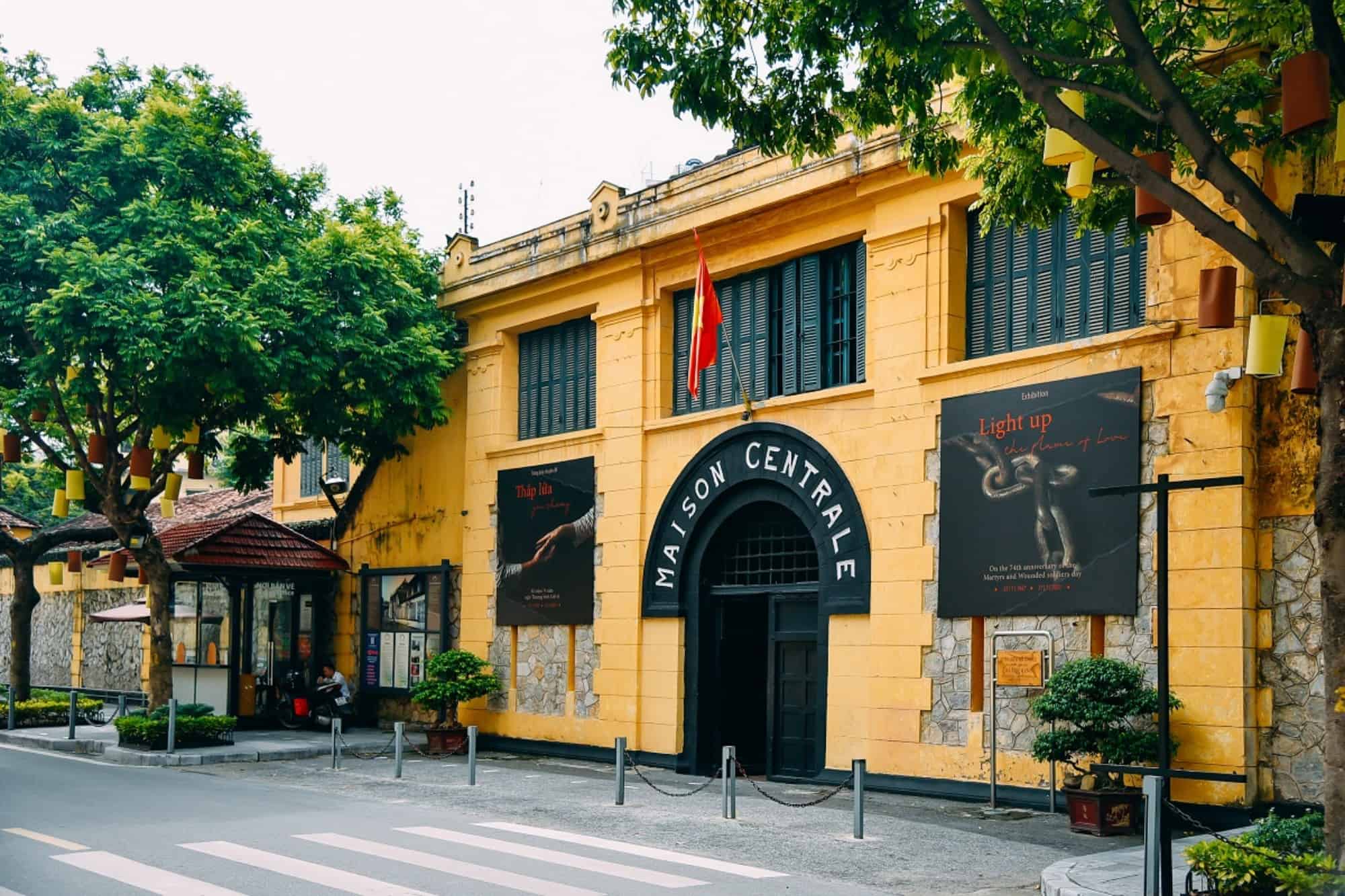
Often referred to as the “Hanoi Hilton,” Hoa Lo Prison is not just a museum—it’s a place where history feels raw and real. In this guide, you’ll discover its history, what to expect during your visit, and practical tips to make the most of your experience.
Overview of Hoa Lo Prison
Located in the heart of Hanoi, Hoa Lo Prison is one of the country’s most important historical landmarks. Known for its intense past and emotionally powerful exhibits, it draws both international tourists and Vietnamese visitors who want a deeper understanding of the nation’s history.
Basic information:
- Address: 1 Hoa Lo Street, Hoan Kiem District, Hanoi
- Opening hours: 8:00 AM – 5:00 PM (daily)
- Entrance fee: Budget-friendly, accessible to most visitors
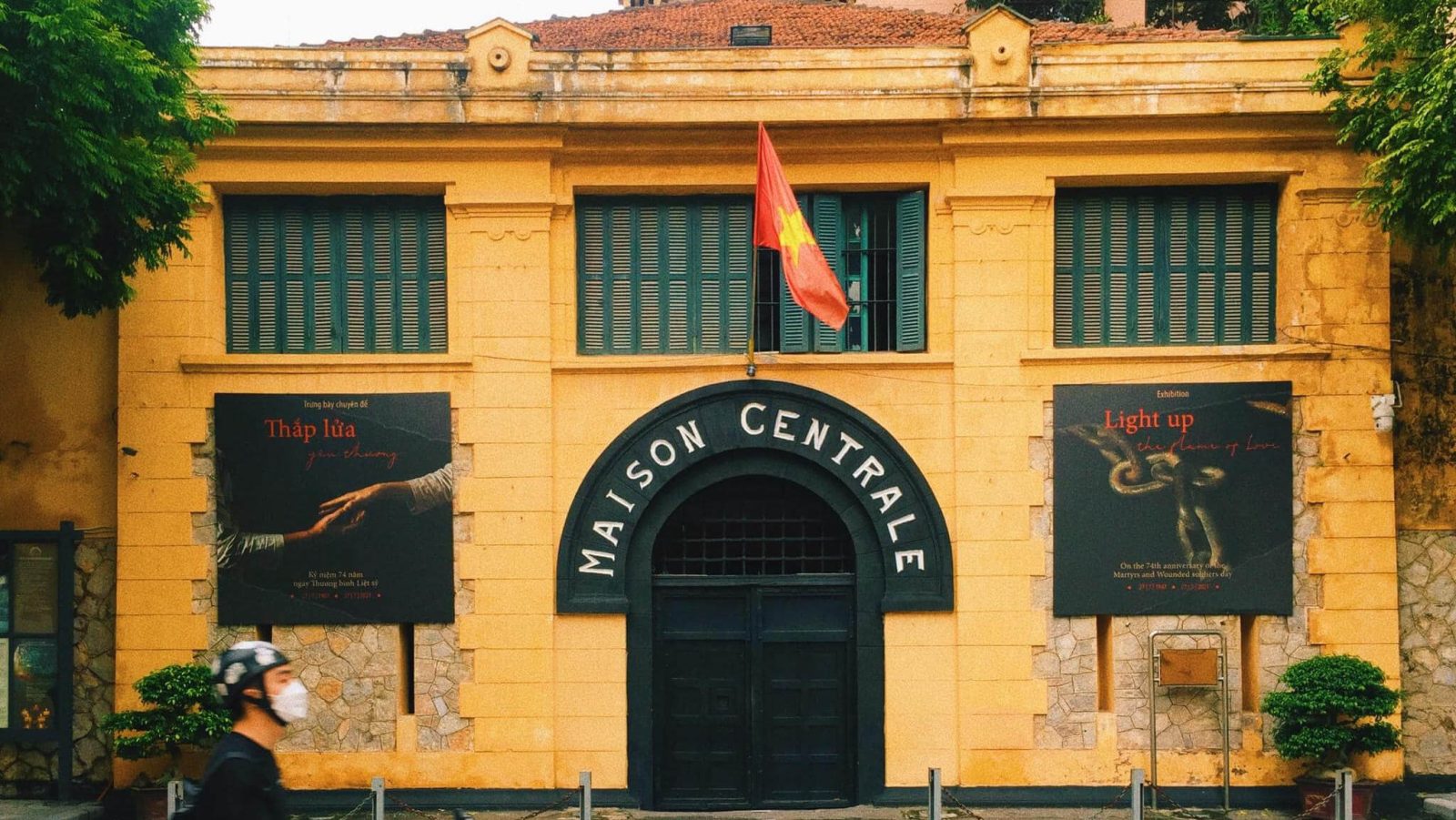
Often referred to as the “Hanoi Hilton” by American prisoners of war during the Vietnam War, the prison now serves as a museum documenting multiple historical periods—from French colonial rule to wartime experiences. Its central location makes it easy to combine with visits to nearby attractions like Hoan Kiem Lake or the Hanoi Old Quarter.
🎟️ Ticket prices (updated 2026)
- Adults: 50,000 VND / ticket
- Students (with ID): 25,000 VND (50% discount)
- Elderly (Vietnamese citizens over 60): 25,000 VND
- People with severe disabilities / policy beneficiaries: 25,000 VND
- Children under 16, people with special severe disabilities, national contributors: Free
- Audio guide rental: ~50,000 VND per device (Available in Vietnamese, English, and French)
2. The History of Hoa Lo Prison: From Colonial Jail to War Relic
2.1. French Colonial Period (late 19th century – 1945)
Hoa Lo Prison was constructed by the French colonial administration around 1896, during a period when France was tightening its control over Vietnam. Originally named Maison Centrale (meaning “Central Prison”), it was intended to incarcerate Vietnamese political prisoners—particularly revolutionaries and independence activists who opposed colonial rule.
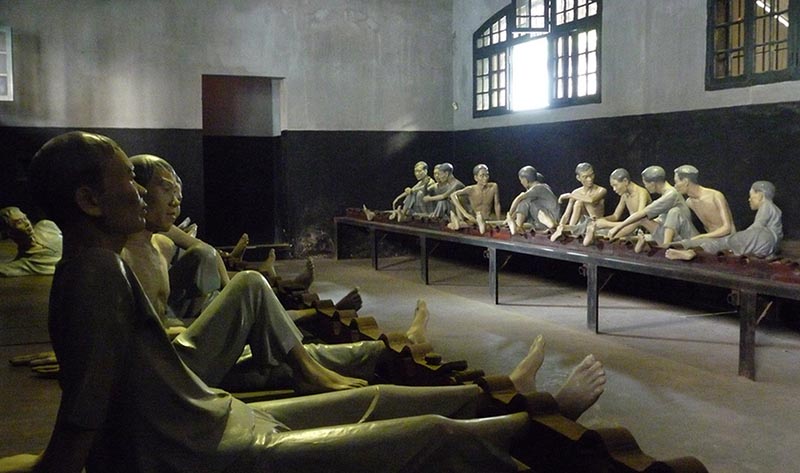
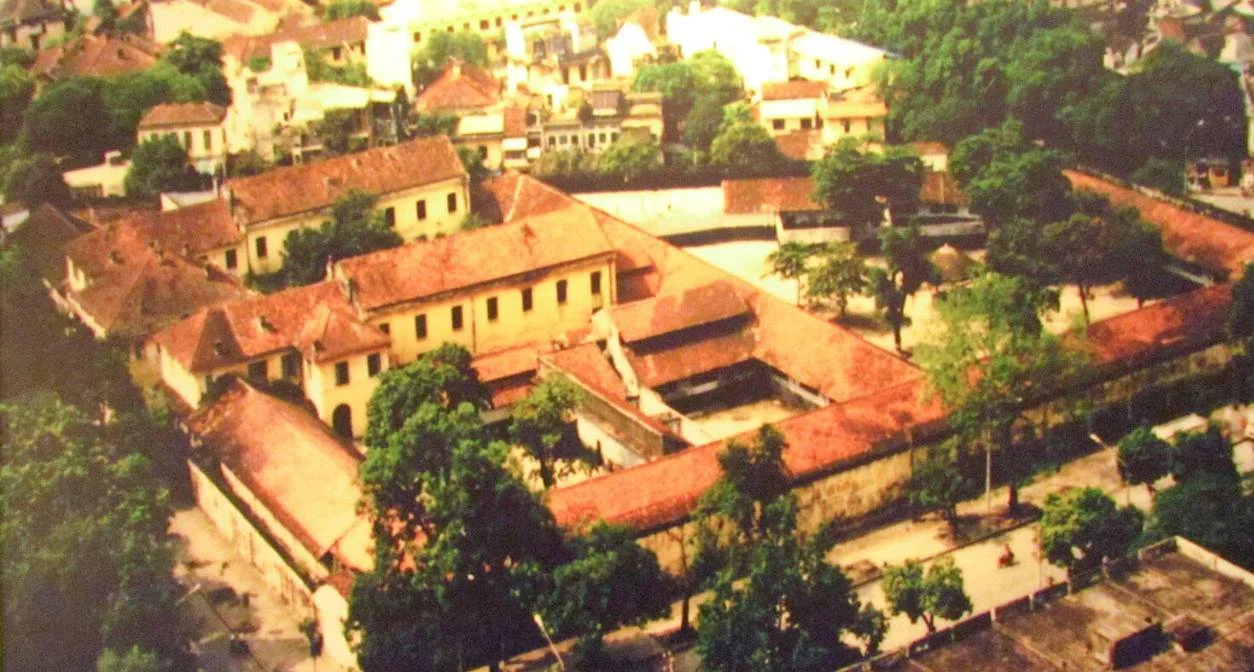
At the time, the site was one of the largest and most heavily fortified prisons in Indochina. Thick stone walls (up to 0.5 meters wide), electrified barbed wire, watchtowers, and iron doors reinforced its reputation as a place from which escape was nearly impossible.
Harsh Living Conditions
Life inside the prison was extremely brutal, reflecting the broader repressive policies of the colonial regime:
- Severe overcrowding: Although designed for a few hundred inmates, the prison often held thousands at once. Prisoners were packed tightly in communal cells with little personal space.
- Physical restraints: Many prisoners were shackled in long rows, their legs locked in iron stocks for extended periods, restricting even basic movement.
- Poor nutrition: Meals were minimal and lacking in nutrients, leading to widespread malnutrition and disease.
- Unsanitary environment: Limited access to clean water and hygiene facilities caused frequent outbreaks of illness.
- Harsh punishment: Beatings, solitary confinement, and torture were commonly used to extract information or suppress resistance.
These conditions made Hoa Lo notorious as one of the harshest prisons in colonial Southeast Asia.
A “School of Revolution”
Despite the brutality, the prison became an unexpected center of political education and solidarity among inmates. Many prisoners were key figures in Vietnam’s independence movement, including members of early communist and nationalist organizations such as the Indochinese Communist Party.
Inside the prison walls:
- Prisoners secretly shared political ideas and revolutionary theories
- They organized underground classes to educate fellow inmates
- They maintained strong morale and unity, even under constant surveillance
Rather than breaking their spirit, Hoa Lo often strengthened their resolve. For many Vietnamese, the prison came to symbolize not just suffering, but also resilience, resistance, and the determination for independence.
2.2. Vietnam War Period
During the Vietnam War (approximately 1955–1975), Hoa Lo Prison continued to be used as a detention facility, primarily for American pilots and military personnel captured during air combat over North Vietnam.
As air raids intensified, many U.S. pilots who were shot down were brought to Hanoi and detained here. As a result, the prison became closely associated with wartime memories between Vietnam and the United States.
American POWs and detention conditions
During their imprisonment, prisoners of war (POWs) were held in different sections of the facility. According to museum exhibits, prisoner management included:
- Separation into smaller detention groups
- Strict control of daily routines
- Provision of basic food supplies and medical care
- Tight monitoring of movement and communication
Vietnamese accounts state that prisoners were treated in accordance with wartime regulations and the Geneva Conventions, while former American POWs have provided differing memoirs and recollections regarding their living conditions.
“Hanoi Hilton” and prisoners’ perspectives
American prisoners ironically nicknamed the facility the “Hanoi Hilton,” referencing the well-known Hilton hotel chain, creating a contrast between the humorous name and the harsh realities of wartime imprisonment.
One of the most notable prisoners was John McCain, who later became a senior political figure in the United States. He was held here after being shot down in 1967 and spent several years in captivity during the war.
Differences in historical interpretation
A notable aspect is that interpretations of this period are not entirely consistent among the parties involved. Vietnam and the United States have different sources, memoirs, and narratives regarding prisoner conditions and wartime experiences.
This diversity of perspectives makes a visit to Hoa Lo Prison not only a historical experience but also an opportunity for reflection on how history is remembered and represented in different ways.
2.3. Modern-Day Museum
In the 1990s, much of the original structure of Hoa Lo Prison was demolished. However, a significant portion was preserved and later transformed into a museum.
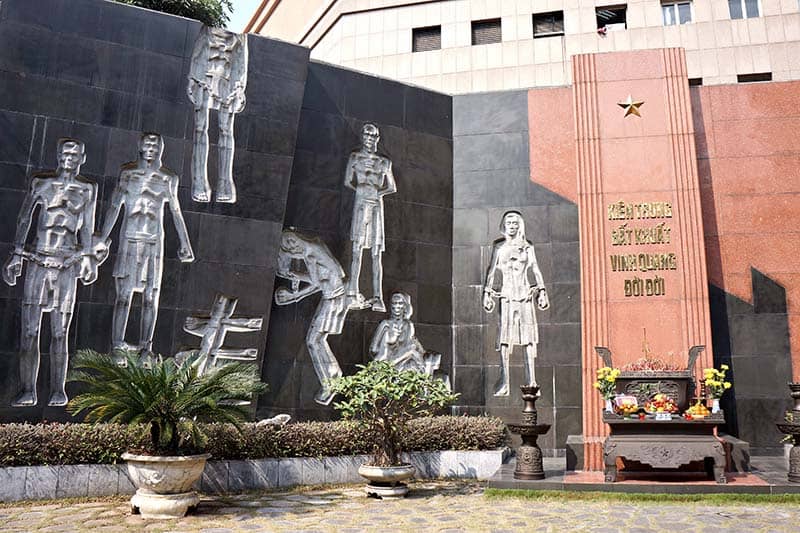
Today, Hoa Lo Prison serves multiple roles:
- A historical monument preserving important traces of the past
- A cultural and educational site for visitors and students
- A place for reflection on war, history, and human resilience
Through its preserved structures, reconstructed exhibits, and curated narratives, the museum helps visitors better understand the complex historical layers of the site—from colonial imprisonment to wartime detention—and encourages reflection on both suffering and endurance across different periods of history.
3. Architecture of Hoa Lo Prison
The architecture of Hoa Lo Prison is a typical example of late 19th-century French colonial prison design, where control, isolation, and intimidation were prioritized. The structure was not merely built for detention, but as a system for strict human management.
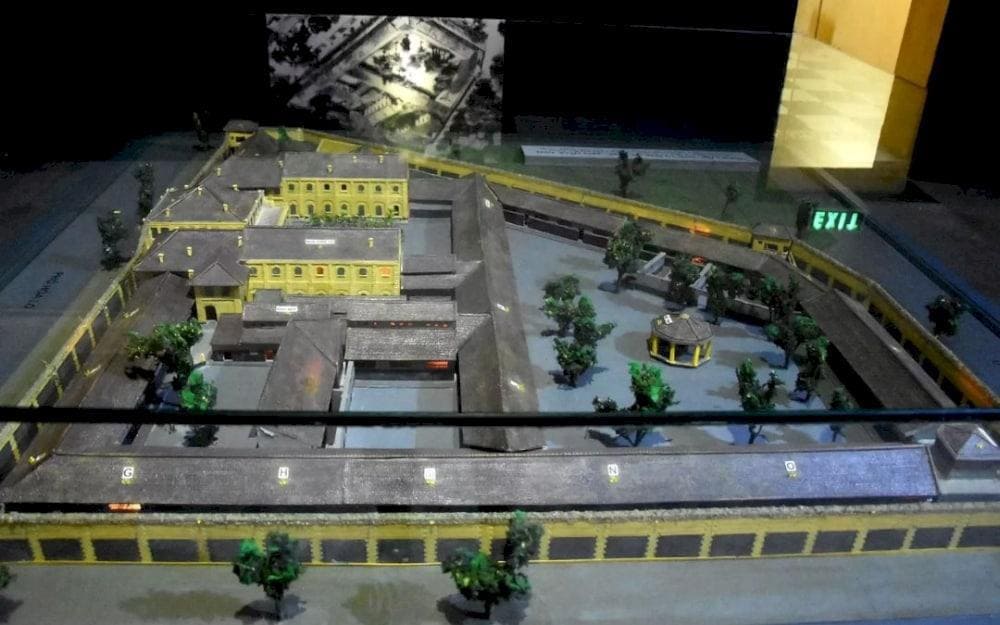
A, Overall scale and structure
Originally, the prison complex was built on a large scale to accommodate political prisoners in Indochina. The entire site was enclosed by:
- Thick, high stone walls that were extremely difficult to breach
- Dense layers of barbed wire surround the compound
- Multiple iron gates control entry and exit
- Watchtowers positioned at corners for full surveillance
This layout formed a sealed complex, completely isolated from the outside world, leaving prisoners with almost no connection to society.
B, Architectural features of control
The architectural elements were intentionally designed to strengthen control:
- Thick, cold stone walls: providing not only security but also a heavy, oppressive atmosphere
- Heavy iron doors: multiple locked barriers restricted movement between sections
- Narrow, dark corridors: limited natural light, creating a sense of confinement and disorientation
- Enclosed spaces: all movement could be monitored from several points
Together, these features created an environment that was both physically and psychologically restrictive, aimed at weakening prisoners’ resistance.
C, Internal layout and functions
The interior space was divided into several clearly defined areas:
- Communal cells: used to detain large groups of prisoners in overcrowded conditions
- Solitary confinement cells: designed to isolate individuals considered dangerous or subject to punishment
- Administrative area: used for record-keeping, management, and surveillance of prison operations
- Courtyard areas: limited spaces for controlled movement and prisoner management
This structured layout allowed the prison system to operate efficiently while maintaining strict control over different prisoner groups.
D, Architecture as an instrument of power
A distinctive feature of Hoa Lo Prison is that its architecture functioned as an instrument of power. Every design element served a specific purpose:
- Controlling human behavior
- Restricting communication between prisoners
- Creating psychological pressure and fear
- Maintaining order through constant surveillance
Thus, the prison was not only a place of physical confinement but also an architectural tool designed to influence the mind and suppress resistance.
4. What to See at Hoa Lo Prison
When visiting Hoa Lo Prison, the museum is arranged to guide visitors through different layers of history. Each section highlights a distinct aspect of the prison’s past, from colonial punishment to wartime imprisonment and symbolic spaces of reflection.
4.1. Discovering the Giant Guillotine
One of the most striking and unsettling artifacts displayed is the original guillotine used during the French colonial period.
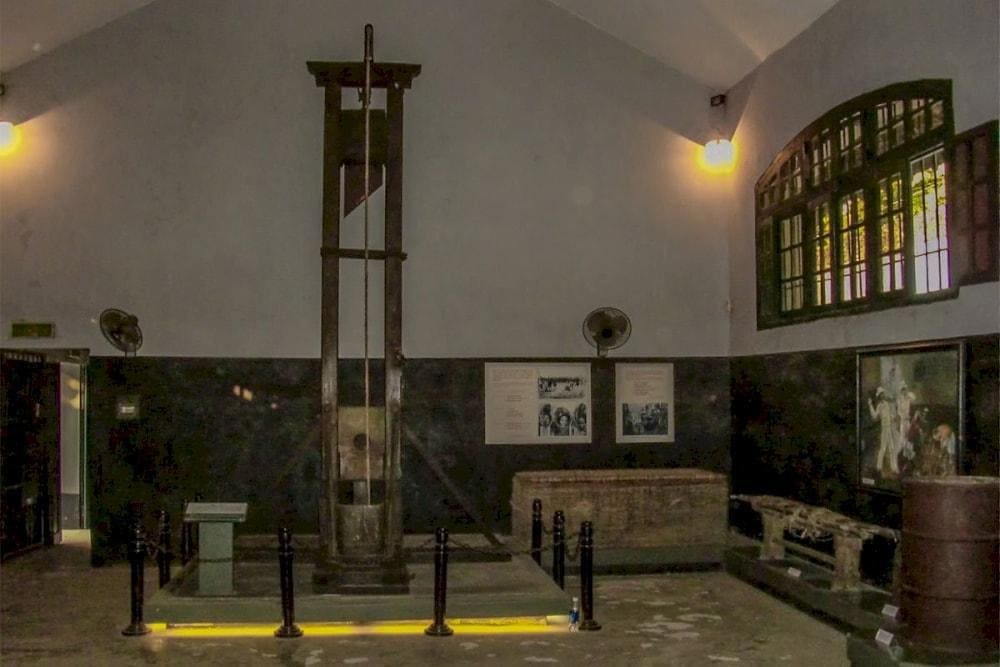
This execution device was brought by the French administration and used in various prisons across colonial Indochina. Its presence inside the museum today serves as a powerful reminder of the harsh punitive system of the time.
The guillotine is displayed in an open exhibition space, allowing visitors to clearly see its structure and scale. Its significance lies not only in its physical presence but also in what it represents:
- The enforcement of colonial authority through fear
- Public executions as a form of control
- The harsh reality faced by political prisoners
For many visitors, this exhibit is one of the most emotionally intense and memorable parts of the museum due to its direct connection to capital punishment in colonial history.
4.2. Exploring the Dark Dungeon “Cachot”
The “Cachot” refers to the solitary confinement cells used during the French colonial period.
These cells are reconstructed or preserved to reflect the original conditions, and they are designed to illustrate extreme isolation.
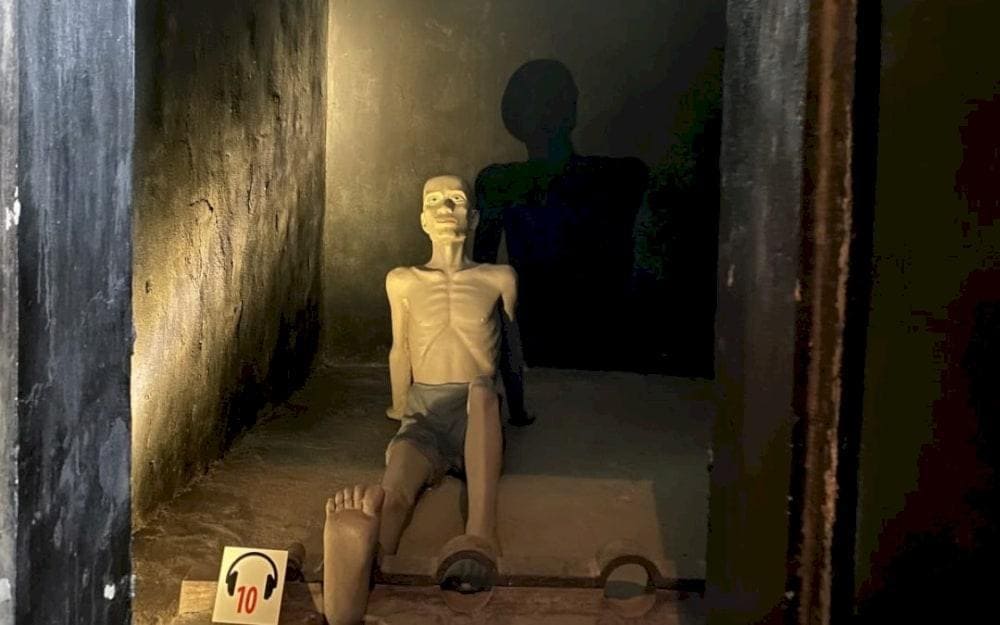
Typical characteristics include:
- Very small, confined spaces with limited movement
- Almost no ventilation, leading to hot and suffocating conditions
- Minimal or no natural light, creating near-total darkness
- Thick stone walls that block sound and contact with the outside
Prisoners placed in the Cachot were often kept in isolation for punishment or interrogation purposes. This section of the museum is particularly impactful because it allows visitors to physically experience how restrictive and oppressive the environment would have felt.
4.3. Visiting the “Love” Banyan Tree
In contrast to the harshness of the prison environment, a large banyan tree in the courtyard stands as a powerful symbol of endurance.
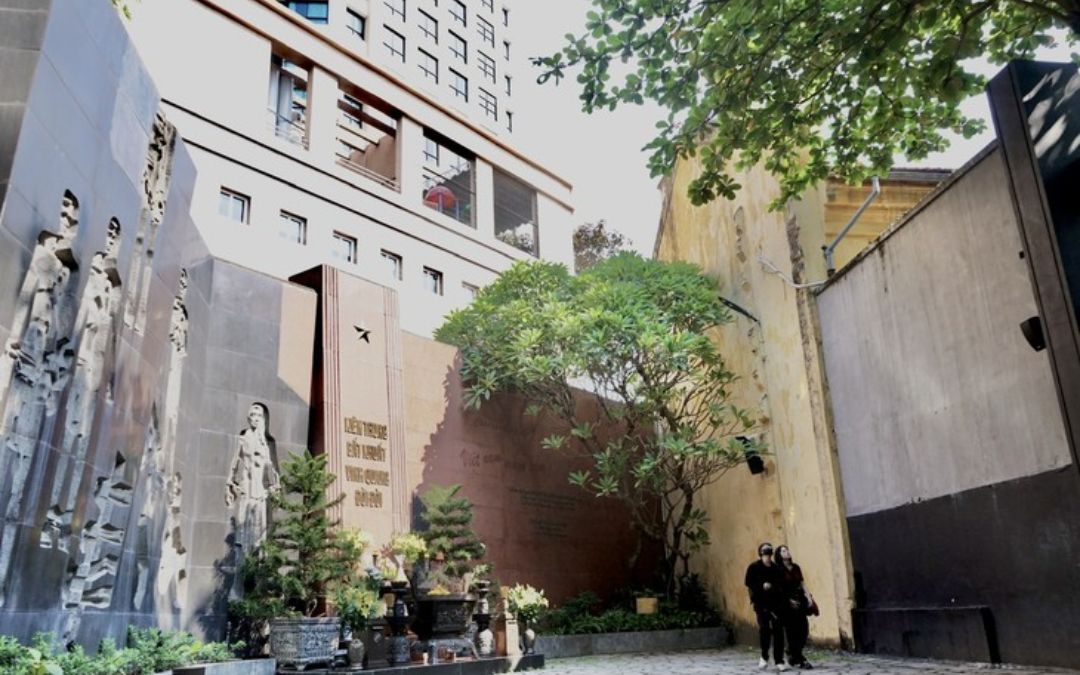
Often referred to as the “Love Tree,” this ancient tree has survived through multiple historical periods of the prison’s existence.
It symbolizes:
- Hope amidst suffering
- Human resilience under extreme conditions
- Emotional connection and solidarity among prisoners
Historically, such courtyard spaces were among the few areas where prisoners had limited access to fresh air and light. Today, the tree offers visitors a moment of calm reflection, standing as a natural contrast to the prison’s heavy atmosphere.
4.4. Joining the Hoa Lo Prison Day Tour and Hoa Lo Prison Night Tour
Hoa Lo Prison offers both daytime and nighttime visiting experiences, each designed to present history in a different way.
Day Tour
The daytime visit focuses on:
- Historical exhibits and preserved artifacts
- Self-guided exploration of prison sections
- Informational displays about different historical periods
- A more educational and museum-like experience
This option is ideal for visitors who prefer to explore at their own pace and focus on historical context.
Night Tour
The nighttime experience is more immersive and narrative-driven. It often includes:
- Dramatic lighting effects that highlight key exhibits
- Guided storytelling based on historical events and personal accounts
- Reconstructed scenes that simulate prison life
- A stronger emotional and atmospheric presentation
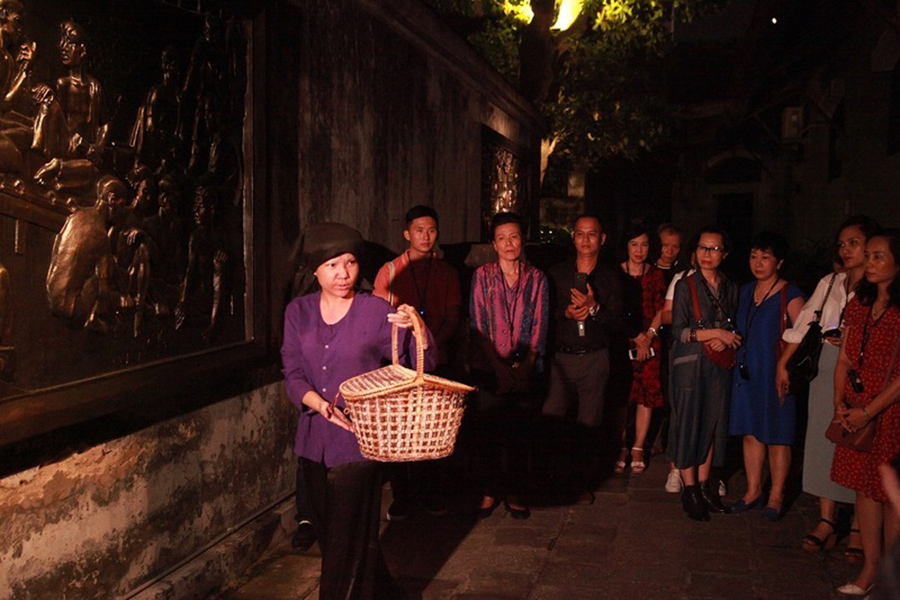
The night tour is especially popular because it transforms the museum into a more theatrical and reflective experience, helping visitors engage more deeply with the human stories behind the history.
5. 6+ Tips for Tourists Visiting Hoa Lo Prison in Hanoi
- Choose the Right Time to Visit: Visit early in the morning or later in the afternoon to avoid crowds and heat.
- Dress Respectfully: As this is a historical and memorial site, modest clothing is recommended.
- Prepare for an Emotional Experience: Some exhibits can be intense and thought-provoking. Be ready for a serious atmosphere.
- Use an Audio Guide or Join a Tour: Guided tours or audio guides help you better understand the historical context behind each exhibit.
- Allocate Enough Time: Plan to spend at least 1–2 hours to fully explore the site.
- Combine with Nearby Attractions: After your visit, explore nearby landmarks such as: St. Joseph’s Cathedral Hanoi, Hoan Kiem Lake, Hanoi Old Quarter
- Follow Museum Etiquette: Avoid loud behavior, Respect restricted areas, Follow photography guidelines
Conclusion – Hoa Lo Prison Hanoi
Hoa Lo Prison is far more than just a tourist attraction—it is a place where history comes alive. From its origins as a colonial prison to its role during the Vietnam War, every corner of this site tells a powerful story.
If you’re looking to understand Vietnam beyond its modern vibrancy, visiting Hoa Lo Prison is an essential experience. It will challenge your perspective, deepen your knowledge, and leave a lasting impression long after your trip to Hanoi ends.
If you need more information about visiting Hoa Lo Prison, ticket details, or travel advice in Hanoi, feel free to contact us. We’re always happy to help you plan a meaningful and smooth journey.
📩Contact us here to get a free itinerary and quotation.
WhatsApp Hotline: +84965514942.
Email: info@vietnamjourneysgroup.com